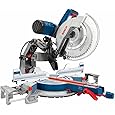
BOSCH CM10GD Compact Miter Saw – 15 Amp Corded 10-Inch Dual-Bevel Sliding Glide Miter Saw with 60-Tooth Carbide Blade
Category: Miter Saws
Yes BOSCH CM10GD excels in small workshops by offering compact, accurate cutting. The 15 Amp motor and Axial-Glide sliding action save space while boosting control. I place this recommendation in the context of Miter Saws for makers building speaker stands and enclosures.
Why the BOSCH CM10GD Compact Miter Saw suits small shops
Compact sliding miter saws succeed when they deliver space savings, accuracy, and repeatable setups for limited benches. BOSCH CM10GD Compact Miter Saw – 15 Amp Corded 10-Inch Dual-Bevel Sliding Glide Miter Saw with 60-Tooth Carbide Saw Blade balances those three needs with an Axial-Glide system designed to reduce the usual rear swing of a sliding head. CM10GD uses front-mounted bevel controls and square-lock fences to shorten setup time and keep fences stable for assembly work like speaker cabinet corners. The included 60-tooth carbide blade and 4,800 no-load RPM motor pair to cut plywood and hardwood for small audio projects cleanly, so builders avoid excessive tearout and sanding.
How do the saw s weight and footprint affect workshop layout?
The reviewed BOSCH CM10GD miter saw reduces front-to-back footprint by up to 10 inches. This CM10GD 10-Inch Miter Saw moves the sliding rail geometry forward, which shortens the depth you must reserve on a workbench. The Axial-Glide arrangement requires a roughly 30-inch depth from front to back without the arm included, so you can plan a narrower bench than with traditional sliding miter saws. Reduced depth helps when placing outdoor speaker build stations against a wall, allowing more room for clamps, drivers, and finishing supplies.
Cutting performance and accuracy for compact shop carpentry
Small-shop carpentry depends on consistent bevels, clean cross-cuts, and reliable repeatability for parts like speaker baffles or enclosure panels. BOSCH CM10GD delivers a 60-tooth carbide blade and a 15 Amp motor running at 4,800 no-load RPM, which provides smooth cuts in cabinet-grade plywood and common hardwoods such as birch and poplar. The square lock precision fences and adjustable miter and bevel detents let you reproduce miter and bevel angles without wasting stock or re-measuring. The clear lower guard and ambidextrous soft-grip handle improve line-of-cut visibility, which reduces mistakes when you cut multiple identical panels.
What blade choices best match different hardwoods and plywood?
CM10GD ships with a 60-tooth carbide blade that suits finish cuts on plywood and soft hardwoods. A 60-tooth blade produces cleaner edges on cabinet veneers and laminate, so you reduce tearout when cutting cabinet-grade birch plywood. For faster rip-like cross-cuts in construction pine or thicker stock, a 40-tooth carbide blade works better because it removes material faster with slightly rougher edges. For dense hardwoods like oak or maple, a 80-tooth or a carbide combination blade improves edge quality but slows feed rate, so you must feed more slowly and maintain firm stock support.
Blade specification examples for shop use
- Included: 10-inch, 60-tooth carbide saw blade (factory-supplied finish blade)
- Alternate: 10-inch, 40-tooth carbide blade for faster stock removal
- Alternate: 10-inch, 80-tooth or triple-chip grind (TCG) blade for dense hardwoods
Choosing the correct blade requires matching tooth count and grind to material and finish requirement, which improves cut speed and reduces sanding time when building speaker baffles or stands.
Maintaining BOSCH CM10GD: tips for long life in tight shops
Routine maintenance keeps compact saws accurate and safe in cramped shops where dust accumulates quickly. BOSCH CM10GD includes a dust collection chute and a vacuum adapter, and you should connect a shop vac after every large project to prevent abrasive dust from entering bearings and slides. The Axial-Glide bearings and rails require occasional cleaning and light lubrication; clean with compressed air and a soft brush, then apply a thin film of dry lubricant recommended for linear bearings, which preserves the smooth glide without attracting dust.
How often should I perform blade alignment and calibration?
The reviewed BOSCH CM10GD miter saw needs alignment checks at least every three months under regular hobby use. Check miter and bevel detent accuracy, fence squareness, and blade-parallel-to-fence alignment after about 50 to 100 hours of cutting or when you notice shifting or inconsistent cuts. Use a reliable 12-inch combination square and a dial indicator when available; these tools let you detect offsets smaller than 0.5 degrees or a few thousandths of an inch. Recalibration saves material waste and keeps parts for outdoor speakers fitting tightly, which improves sound sealing and bass response.
Additional practical relationships and build tips
- CM10GD requires a 15 Amp AC circuit; using a circuit with less capacity risks tripping breakers.
- The saw works with standard 10-inch blades, so replacement and specialty blades from Freud or Diablo fit most needs.
- Using the dust port with a shop vac improves air quality and prolongs bearing life by reducing abrasive dust exposure.
Follow-up question: How loud is this saw and what hearing protection do I need? The CM10GD motor and blade combination typically produces noise in the 95-105 dB range under load, so you should wear earmuffs rated NRR 25-30 dB and use earplugs for extended sessions. Follow-up question: Can I mount the saw to a portable table for outdoor speaker builds? Yes, mounting works when you secure a flat, rigid table and leave the front clearance for the Axial-Glide motion; secure the saw to avoid movement during long, precise rip or bevel cuts. Follow-up question: Does the saw handle nested crown or crown chops for angled speaker baffles? The saw s crown chop lock and dual-bevel design allow nested crown or steep angle chops, but verify your compound angles against a test piece before cutting expensive veneer or prefinished panels.