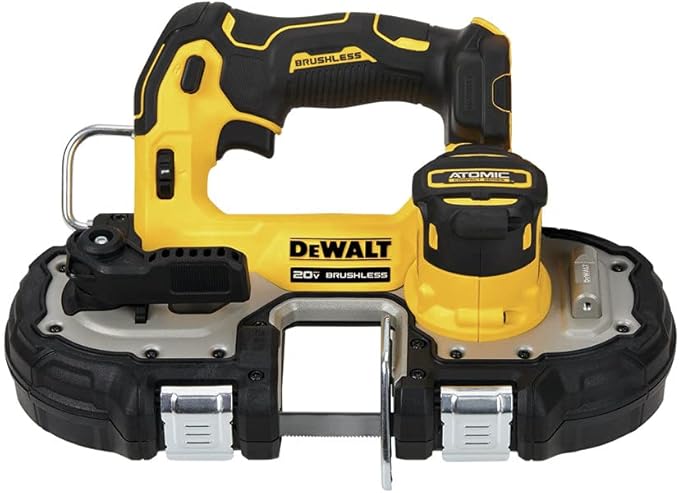
DEWALT ATOMIC 20V MAX Brushless Cordless 1-3/4 in. Compact Bandsaw, Bare Tool Only (DCS377B)
Category: Band Saws
DEWALT ATOMIC 20V MAX Brushless Cordless 1-3/4 in. Compact Bandsaw, Bare Tool Only (DCS377B) wins. Integrated guard and 6.6 lbs weight enable comfortable one-handed overhead operation. Among Band Saws, this compact cordless model balances portability, safety, and cut capacity.
DEWALT DCS377B Advantages for One-Handed Overhead Cutting
Band Saws used overhead require light weight, robust guarding, and predictable blade tracking; DEWALT DCS377B delivers those features. The DEWALT compact band saw contains a brushless motor that increases efficiency and reduces maintenance compared with brushed motors (brushless motor means less wear and longer life). This DCS377B compact bandsaw runs on the 20V MAX platform (20V MAX indicates the battery voltage platform), and it gives variable-speed control for matching cut speed to material. The reviewed DEWALT DCS377B compact bandsaw includes a hang hook, LED light, single-point tracking, and a pivoting guard secured by a metal latch for safe overhead handling.
- Weight: 6.6 lbs
- Cut capacity: 1-3/4 in.
- Motor: Brushless
- Power platform: 20V MAX (battery sold separately)
How can I set up a band saw for safe overhead one-handed use?
1-3/4 in. compact cordless bandsaw enables secure overhead one-handed setup. Mount the hang hook so the tool rests when you change positions and avoid unsupported suspension. Place the integrated guard in the lowest practical position; lock the pivoting guard with the metal latch before starting the cut. Use single-point tracking adjustment to center the blade and reduce side play, which improves control during one-handed overhead cuts.
One-Handed Overhead Band Saw Techniques for Tradespeople
Tradespeople performing overhead one-handed cuts require deliberate stance, tool orientation, and workpiece control; this DCS377B supports those techniques. The DEWALT compact band saw design favors a neutral wrist position and keeps the center of gravity close to the hand, which reduces fatigue on long jobs. Set the variable-speed trigger and speed dial to match material: slower speed for stainless steel, faster for mild steel and non-ferrous metals. Keep the hang hook engaged when moving on scaffolding and attach a lanyard to the lanyard-ready loop for fall prevention when working at heights.
What safety practices minimize risk during overhead one-handed cuts?
DCS377B enforces safer cutting by combining guard design with tracking adjustment to reduce blade deviation. Always wear eye protection and a hard hat when cutting overhead to stop falling chips and debris from causing injuries. Use cut-support clamps or a powered pipe vise to secure the workpiece; secure material prevents sudden movements that can yank the tool or blade. Limit one-handed use to short, controlled cuts and reposition to two-handed cuts for longer or awkward cuts to minimize fatigue and risk.
DEWALT DCS377B Versus Alternatives for Overhead One-Hand Use
Comparing compact cordless models, the DEWALT DCS377B balances weight, cut capacity, and guarding better than many rivals. The DCS377B compact bandsaw competes with Milwaukee M12 and Makita 12V cordless compact saws, but DEWALT offers a 1-3/4 inch cut capacity at 6.6 lbs, giving a wider material range with similar portability. For heavier-duty station work, corded 3/4 inch or larger models from Lenox and Bosch provide higher continuous power but sacrifice one-handed overhead practicality. The reviewed DEWALT DCS377B compact bandsaw therefore improves portability and overhead safety while still cutting pipe, conduit, and small structural stock effectively.
What aftermarket blades and guides optimize overhead cutting efficiency?
DEWALT compact band saw uses appropriate blades to improve cut speed and reduce kick, especially bi-metal blades rated for the target material. Choose bi-metal blades for ferrous metals for durability; choose carbide-grit or high-TPI blades for non-ferrous or thin-wall tubing to reduce burrs. Install roller guides or low-friction thrust bearings if you need tighter tracking and longer blade life during repetitive overhead cuts. For specific recommendations, use these blade parameters when ordering replacements:
- Blade type: Bi-metal for steel; carbide-grit for non-ferrous or abrasive composites
- Blade width: 1/2 in. to 3/4 in. for 1-3/4 in. capacity tool
- TPI (teeth per inch): 14-18 TPI for general steel; 18-32 TPI for tubing and thin-wall metal
Upgrading to precision guides and the right blade improves cut quality, reduces rework, and lowers tool torque spikes during overhead one-handed work.
Follow-up questions readers often search after this article include: “How long will a 20V MAX battery run with this bandsaw?” and “Which blade brand lasts longest cutting stainless steel?” A typical runtime depends on battery capacity and cut aggressiveness; expect 20-40 minutes on a 2.0Ah battery under moderate loads, and longer on 4.0Ah packs. For stainless, choose high-TPI bi-metal blades from Lenox or Starrett for longer life and fewer breakages. Another common question is “Can I use this tool on jobsite scaffolding?” Use the hang hook, attach a lanyard, and follow scaffold safety rules; limit one-handed cuts to short tasks and always secure the workpiece.