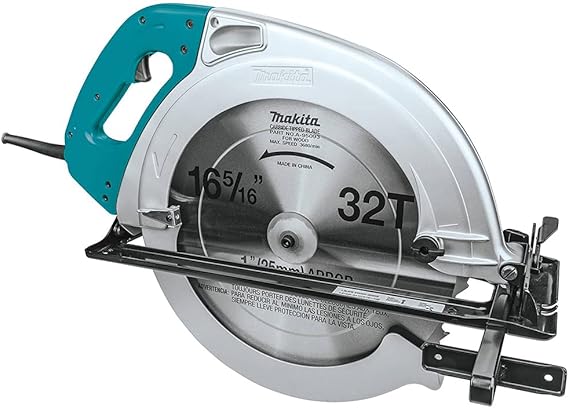
Makita 5402NA 16-5/16-inch Circular Saw
Category: Circular Saws
Pick Makita 5402NA 16-5/16-inch Circular Saw for raw power; pick Milwaukee for mobility. Makita 5402NA delivers high torque and sustained RPMs; Milwaukee favors cordless convenience. Circular Saws rank essential for contractors cutting large posts, beams, and timber on site.
Makita 5402NA Performance Analysis for Jobsite Demands
The Makita Circular Saw combines 15 AMP corded power with a large 16-5/16-inch blade suited for heavy timbers. This 5402NA weighs 32.1 pounds and supplies 2,300 no-load RPM for steady, aggressive cutting. Electric brake and corded electric power maintain workflow safety and indefinite runtime without battery swaps. Contractors gain consistent single-pass cuts through 6x stock, improving productivity on framing and log work.
Key technical specifications and cutting capacity for the Makita 5402NA review
- Motor current: 15 AMP
- No-load speed: 2,300 RPM
- Blade diameter: 16-5/16 inch
- Weight: 32.1 lbs
- Power type: corded electric; feature: electric brake
- Cutting claim: cuts 6x material at 90 and 4x material at 45 in one pass
- MSRP example: $119.99 USD (street prices vary)
The reviewed Makita 5402NA circular saw lacks documented arbor size, cord length, and warranty details, requiring buyer verification. Because arbor size (diameter of blade mounting hole) matters for blade compatibility, buyers must confirm arbor and blade inclusion before purchase. If stores lack spare blades, choose blades rated for thick timber, 16-inch carbide-tipped ripping blades with 24-32 teeth. Verifying service centers and carrying spare bearings and solid 16-inch blades prevents long job delays.
How do motor RPM and torque impact cutting thick timbers?
5402NA delivers 2,300 RPM and robust torque, enabling single-pass cuts through 6x timbers at 90 degrees. Torque (rotational force) works with RPM (revolutions per minute) to determine blade penetration speed. Lower tooth-count rip blades and full-bodied carbide teeth improve feed rates and reduce bogging. Matching blade gullet size and using lubricant on green wood reduces motor stall and prolongs gear life.
Comparing durability, power, and ergonomics for contractors
For on-site durability, the 16-5/16-inch circular saw favors corded Makita strength, while Milwaukee emphasizes portability. The Makita’s 15 AMP motor and 32.1-pound mass stabilize long cuts and reduce vibration under load. Milwaukee cordless saws cut setup time and trip hazards, but they require charged batteries for torque. Choose corded units for continuous heavy ripping; choose cordless for remote sites without reliable power.
How often should jobsite crews service bearings and gears?
Contractors should inspect bearings and gears every 50-100 operating hours to prevent premature failure and downtime. Bearings (rolling elements) support shafts; gears transmit drive torque across the saw gearbox. In dusty or pressure-treated lumber work, service intervals shrink to 25-50 hours with frequent lubricant replacement. Keep spare sealed bearings, high-temp grease, and a gearbox cleaning brush in the job trailer.
Milwaukee Heavy-Duty Saw Benefits and Jobsite Tradeoffs
Milwaukee heavy-duty saws maximize jobsite mobility and electronics, but they trade continuous runtime and raw torque. Compared to the reviewed Makita 5402NA circular saw, Milwaukee models reduce cord hazards and simplify transport. Milwaukee M18 FUEL systems deliver high sustained power when paired with XC or HD batteries, though runtime varies. For remote sites, bring spare battery packs and onboard chargers; for continuous ripping, choose corded models.
Which warranty terms and service networks matter for contractors?
Contractors should prioritize warranty length and authorized service centers to minimize downtime. Verify whether the warranty covers labor, replacement parts, and cross-shipping for faster return to service. Check brand dealer networks in your city or region for loaner availability during repairs. Register every saw online, keep invoices, and tag serial numbers to speed warranty claims.
Q: Is corded better than cordless for heavy timber? Yes corded tools deliver sustained torque without battery swaps. Q: Which blade size and tooth count suits 6x timbers? Use 16-inch carbide ripping blades with 24-32 teeth. Q: How transport heavy circular saws? Use padded cases, secure to trailers, and lock blades.