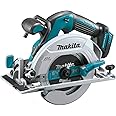
Makita XSH03Z 18V LXT Lithium-Ion Brushless Cordless 6-1/2 Circular Saw (Tool Only)
Category: Circular Saws
Makita XSH03Z 18V LXT Lithium-Ion Brushless Cordless 6-1/2 ” Circular Saw (Tool Only) favors runtime; DeWalt favors platform flexibility. Makita uses 18V LXT Star batteries and claims up to 50 longer run time. This comparison helps buyers choose between two 6-1/2-inch Circular Saws.
Makita XSH03Z vs DeWalt 6-1/2-inch cordless saw comparison
Makita XSH03Z 18V LXT Lithium-Ion Brushless Cordless 6-1/2 ” Circular Saw (Tool Only) delivers brushless motor power and runtime, while DeWalt emphasizes platform battery choice. Both 6-1/2-inch Circular Saws handle framing and trim, but blade speed and battery chemistry change cutting behavior. Key delivered specifications compare directly between the two brands.
Core specification highlights for on-job performance
- Blade diameter: 6-1/2″
- Motor: Makita BL Brushless motor (electronically controlled)
- No-load speed: 5,000 RPM
- Battery compatibility: Makita 18V LXT and compact Li-Ion (Star) batteries
- Run-time claim: up to 50 longer run time per charge
- Packaging: Tool Only (battery and charger sold separately)
These technical points show that motor speed and battery chemistry drive real-world cutting differences. Makita 6-1/2-inch circular saw tool-only costs about $199, so budget extra for batteries and a charger. DeWalt platform owners can often reuse existing 20V batteries across saws, drills, and impact drivers.
Which specific specs determine real-world framing performance?
No-load RPM dictates cut speed and influences tear-out on framing lumber. Motor torque (rotational force) determines how well the saw sustains cuts through dense or wet lumber. Arbor size and blade kerf affect chip removal and binding risk; deeper kerf removes more material. Battery amp-hour (Ah) rating and voltage determine available energy and sustained torque under load.
Choosing a 6-1/2-inch cordless saw for contractors and DIYers
Makita XSH03Z 18V LXT Lithium-Ion Brushless Cordless 6-1/2 ” Circular Saw (Tool Only) suits DIYers seeking runtime; DeWalt battery platforms suit contractors prioritizing interchange. Contractors value tool durability, quick battery swaps, and widespread service networks for jobsite continuity. DIYers favor lighter saws, lower initial cost, and compatibility with their existing home-shop batteries. Consider blade capacity, bevel range, and included guards when balancing portability against cutting capability.
How do I pick a 6-1/2-inch cordless saw for roofing vs finish?
Roofing requires fast cut speed and shallow depth for efficient sheathing cuts. Set the saw to full depth at 90 degrees for roof decking and use carbide-tipped blades rated for framing. Finish carpentry requires fine-tooth blades, slower feed rates, and precise bevel control to limit tear-out. For finish work, choose a lighter saw with accurate bevel stops and dust control to protect delicate trim.
Makita XSH03Z pros, battery life and DeWalt compatibility
Makita XSH03Z 18V LXT Lithium-Ion Brushless Cordless 6-1/2 ” Circular Saw (Tool Only) excels in runtime and compact brushless efficiency, while DeWalt wins on system compatibility. Brushless motor technology reduces maintenance by eliminating carbon brushes and improves efficiency under load. Star Protection computer controls improve tool-battery communication to prevent over-discharge and extend cell life. DeWalt 20V MAX and other common systems typically allow cross-tool battery use, easing fleet management on mixed-brand sites.
Can I use the same batteries across different 18V tool lines?
Makita 18V LXT batteries work only with Makita tools marked with the Star compatibility symbol. Cross-platform use requires matching voltage, battery shape, and electronic protocol; most brands do not interoperate. For first-time buyers, choose a single battery platform to simplify charging, spares, and future tool purchases. Will a 2.0Ah battery finish a deck expect battery swaps because 2.0Ah rarely sustains large decking runs. Do adapters let Makita and DeWalt batteries mix adapters exist but reduce safety and may void warranties.
Follow-up searches readers often ask next include: “How long will a specific Ah battery run under framing?” and “Which blade tooth count works best for plywood sheathing?” A 4.0Ah battery runtime depends on cut density; heavy framing can drop runtime under an hour, while lighter trim work can last much longer. For sheathing, use a 24-40-tooth carbide blade for a balance of speed and clean edges; for finish, 60-80 tooth blades reduce tear-out.