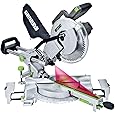
Delta 10 Sliding Compound Miter Saw 26-2241
Category: Miter Saws
Choose DeWalt for portability and service; choose Delta 26-2241 for sliding capacity. The Delta 26-2241 offers a 16-inch nominal cross-cut and 15 A motor for raw power. Miter Saws buyers must weigh portability, cut capacity, and warranty details.
Comparing Delta 26-2241 vs DeWalt 10-inch Miter Saw Performance
Delta 10 ” Sliding Compound Miter Saw 26-2241 delivers sliding capacity and dual-bevel control for shop Miter Saws. The reviewed 26-2241 prioritizes repeatable cuts and ergonomic front controls for frequent use. DeWalt ten-inch offerings instead emphasize quick setup, lighter weight, and dealer support for contractors.
Delta 26-2241 measurable specifications
- Type: 10-inch sliding compound miter saw (model 26-2241)
- Motor: 120V, 15 A, corded AC
- No-load speed: 4,000 RPM
- Blade diameter: 10 inches; arbor: 5/8 inch
- Nominal cross-cut capacity: 16 inches; max cut thickness: 5.5 inches
- Bevel: dual, 45 left / 45 right; 7 bevel stops
- Miter range: 50 left / 60 right; 10 detents with push-button override
- Weight and size: 55 lbs; 29.5 D x 22.5 W x 20 H; cord length 7 ft.
These specs explain why the 26-2241 targets shop users needing wider cross-cuts and repeatability. The combination of sliding rails and dual-bevel increases material versatility compared with compact single-bevel saws. Buyers planning cabinet face frames, wide trim, or tall baseboards will notice the practical capacity gains.
How do motor RPM and torque affect cut quality and speed?
Higher motor RPM increases cutting speed. Torque (rotational force) maintains blade momentum under load and prevents bogging. The 26-2241 pairs a 15 A motor with a 4,000 RPM no-load speed to sustain momentum on thicker stock. DeWalt 10-inch models often tune RPM and torque for lighter weight, trading some sustained momentum for portability.
Choosing a 10-inch miter saw: shop use and portability tradeoffs
Delta 10 ” Sliding Compound Miter Saw 26-2241 suits stationary shop benches where sliding rails improve rip capacity. The 26-2241’s 55-pound weight stabilizes cuts but complicates moving between job sites for mobile installers. By contrast, DeWalt ten-inch portable models trade sliding span for roughly 30-40 lb transportability, easing daily carry and truck storage.
Is a 10-inch miter saw ideal for crown molding and flooring projects?
A 10-inch saw handles most crown molding and flooring cuts. Crown work requires precise compound angles and consistent bevel stops, and a saw with repeatable detents simplifies setups. The reviewed Delta 26-2241 gives repeatability via front bevel release and detent overrides, which helps when cutting spring-angle crown or alternating bevel directions. For wide-built-up baseboards and multi-layer flooring, the sliding span and 5.5-inch thickness capacity provide useful margin compared with non-sliding models.
Which to buy: Delta 26-2241 or DeWalt 10-inch Miter Saw Cost
Delta 10 ” Sliding Compound Miter Saw 26-2241 lists no manufacturer price in the provided product data, so check retailers for current street pricing. Total ownership cost depends on blade selection, stands, dust collection, and replacement parts. DeWalt often carries strong resale and service networks that reduce downtime for professionals, while the Delta model emphasizes shop-cut capacity at potentially lower initial cost.
What warranty length and service support should woodworkers expect?
Manufacturers typically offer limited warranties covering defects. DeWalt commonly provides a three-year limited warranty on power tools, reducing repair risk for workshop owners. The provided Delta product entry lacks warranty and parts-service details, so verify Delta warranty length with the seller before purchase. Also consider local service availability, blade cost, and aftermarket accessories when calculating lifecycle expense.
Follow-up questions readers often search next include: How many teeth should a 10-inch blade have for trim work? Use a 60-80 tooth carbide blade for fine finish cuts and cleaner crown molding edges. How do I mount a sliding saw for mobile use? Bolt the saw to a plywood sacrificial board or dedicated stand, adding anti-vibration pads for stable, repeatable setups.