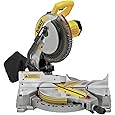
DEWALT DWS716 12-Inch Double-Bevel Compound Miter Saw
Category: Miter Saws
Makita LS1219 generally outperforms the DEWALT DWS716 for contractors needing cutting capacity. DEWALT DWS716 12-Inch Double-Bevel Compound Miter Saw offers lighter portability and quick setup. Miter Saws choice depends on crosscut width, dust control, and jobsite ergonomics.
Performance comparison: DEWALT DWS716 vs Makita LS1219 for pros
For pros who need repeatable, precise cuts, the sliding Makita often wins on capacity while the compact DEWALT favors quick angle work. The sliding action on the Makita LS1219 increases crosscut width and supports larger crown molding, which matters when ripping 2x material or full-width trim. The reviewed DEWALT DWS716 miter saw sacrifices some crosscut range for a lighter footprint and a simple stainless-steel detent plate that delivers reliable miter stops on repetitive trim. Contractors often pick the Makita when long, flat stock and crown inlays dominate the job and choose the DWS716 when frequent truck-to-trailer moves and fast repeats dominate the day.
DEWALT DWS716 technical highlights for on-site comparison
- Blade: 12-inch
- Motor: 15 Amp
- No-load speed: 3,800 rpm
- Bevel range: 0 -48 left/right (double-bevel)
- Miter range: 0 -50 left/right with 14 positive stops
- Crown capacity (nested): 6-5/8 in; Base capacity (vertical): 6-1/2 in
- Dust collection: high-efficiency duct concentrated at cut point
- Portability: lightweight design with built-in carry handle
How do blade quality and bevel systems affect cut accuracy?
Makita LS1219 delivers wider cuts and finer bevel repeatability when you use a higher-tooth blade. A 60-80 tooth carbide-tipped finish blade improves trim edges and reduces tear-out on painted molding, while a 24-40 tooth blade removes material faster for framing. The bevel mechanism quality (dual-bevel gears, locked cam, or precision detent) controls angle repeatability; smoother, indexed bevel gears reduce micro-shift when tilting the head. Choosing the correct blade and a stable bevel system yields cleaner joints and lowers sanding time on finished carpentry.
Jobsite portability, setup speed, and cut accuracy for contractors
Contractors who move between houses value compact weight, fast locks, and intuitive detents over raw crosscut size. DWS716 (the reviewed DEWALT DWS716 miter saw) uses a cam miter lock with detent override to speed angle changes and a built-in carry handle that reduces setup time between stops. Makita LS1219 has sliding rails that increase cut width but adds bulk, which can slow one-person setups and requires careful tail support and transport planning. In practice, crews that value two-person rough cuts choose the Makita for capacity, while one-person finish carpenters prefer the DWS716 for faster positioning and lighter handling.
What setup steps reduce alignment time on busy jobsite miter saws?
DEWALT DWS716 speeds alignment with a stainless-steel detent plate and cam miter lock that produce repeatable stops. Marking common angles on the detent plate and using the detent override for odd angles reduces adjustment time to seconds. Pre-mounting an auxiliary fence, leveling the base on a mobile stand, and pre-setting stop blocks for repeated rip cuts cut layout time. Those quick setup steps reduce measurement errors and keep crews on schedule.
Ownership costs and maintenance: DEWALT DWS716 vs Makita LS1219
Long-term costs depend on blade life, motor durability, and dust management rather than purchase price alone. The reviewed DEWALT DWS716 costs about $349.99 street price and uses a 15 Amp motor that is easy to service and replace blades on, which keeps downtime and service bills lower for high-volume trim work. Makita LS1219 typically carries a higher street price and a more complex sliding assembly that may increase repair costs if linear rails or bearings need replacement after heavy duty use. Contractors should factor blade replacement frequency, possible rail maintenance, and the savings from better dust collection when calculating total cost of ownership.
Which routine maintenance tasks lower repair frequency and costs?
DWS716 requires regular blade cleaning, detent plate inspection, and dust-port clearing to maintain accuracy and motor cooling. Cleaning resin buildup from carbide teeth and verifying the stainless-steel detent plate and cam lock for burrs prevent drift and extend blade life. Lubricating pivot points and keeping the dust chute free reduces bearing wear and motor overheating. Performing these routine steps every 2-4 weeks on busy jobs dramatically lowers repair bills and maintains cut quality.
Practical tips, selection keywords, and quick comparisons for buyers
- Choose a 12-inch sliding model for wide stock; choose compact double-bevel for portability.
- Use 60-80 tooth blades for finish trim; use 24-40 tooth blades for rough framing.
- Look for stainless-steel detent plates and positive stops for repeatable miter accuracy.
- Prioritize dust collection if working indoors; better ports reduce sanding time and HVAC contamination.
Follow-up question: Which saw is best for crown molding installation? A sliding dual-bevel saw like the Makita LS1219 works better for large crown profiles because it increases nesting capacity and crosscut width. Follow-up question: Can DEWALT DWS716 handle occasional wide stock? The DWS716 handles many trim tasks and nested crown up to 6-5/8 inches, but heavy wide ripping is better on a sliding saw. Follow-up question: Which blade is best for painted trim? Choose an 80-tooth carbide finish blade for cleaner painted edges and less chipping.