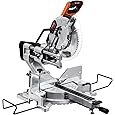
Metabo HPT C10FSHCT Sliding Compound Miter Saw
Category: Miter Saws
The Metabo HPT C10FSHCT suits compact shops while the DeWalt DWS779 fits heavy-duty workshops. Metabo trades longer crosscut capacity for a smaller footprint; DeWalt extends reach with longer rails. These Miter Saws balance portability, accuracy, and crosscut speed for different shop sizes.
Metabo HPT C10FSHCT vs DeWalt DWS779: Power, Size, Accuracy
Metabo HPT C10FSHCT Sliding Compound Miter Saw emphasizes a compact footprint with a reliable 15 Amp motor. The C10FSHCT uses a 10-inch, 40T TCT blade and a short-slide system that reduces rear clearance for bench placement. These Miter Saws prioritize placement flexibility so you can mount the tool against walls or tight benches. By contrast, the DeWalt DWS779 uses longer rails and a larger cutting envelope for wide boards and crown molding. Users select between the two based on needed crosscut width, transportability, and how often they cut sheet goods versus trim.
- Motor: 15 Amp (Metabo HPT C10FSHCT)
- Blade: 10 in, 40T TCT (included with Metabo HPT C10FSHCT)
- Weight: 40.7 lbs (Metabo HPT C10FSHCT)
- Bevel range: 0-48 left/right (Metabo HPT C10FSHCT)
- Miter range: 0-60 right, 0-55 left (Metabo HPT C10FSHCT)
- Slide system: compact zero-rear-clearance short-slide (Metabo HPT C10FSHCT)
- Extras: laser marker, LED light, dust bag, vise assembly (Metabo HPT C10FSHCT)
How do motor power and blade size affect cut accuracy in shops?
Metabo HPT Sliding Compound Miter Saw‘s 15 Amp motor delivers steady torque and preserves cut accuracy under load. A higher amp motor (more electrical current capacity) resists bogging when cutting dense hardwoods, which reduces blade deflection and improves straightness. Blade diameter affects cutting capacity: a 10-inch blade cuts thinner maximum workpiece depth than a 12-inch blade, which matters when you need to crosscut 2×10 or larger stock in one pass. Choose higher tooth counts (for example, 40T versus 24T) for smoother finish cuts and lower tooth counts for faster rough ripping.
Selecting Compact vs Full-Size Sliding Miter Saws for Workshops
Metabo HPT C10FSHCT Sliding Compound Miter Saw works well in garages, small mobile shops, and tight jobsite trailers because it reduces rear clearance needs. The 10-inch short-slide system fits close to walls and on shorter benches, which means you can keep the saw permanently mounted on a narrow workbench. A full-size sliding miter saw like the DeWalt DWS779 trades placement flexibility for longer crosscut capacity, so it demands more setup room for rails and infeed/outfeed support. Plan your workstation around the saw s slide length, fence height, and whether you will cut long crown moulding or sheet goods frequently.
Workshop layout examples and minimum clearance guidelines
- Small bench-top setups: zero-rear-clearance or short-slide saws fit directly against a wall.
- Crown and long trim cutting: long-slide saws typically need 12-24 inches of rear clearance and infeed/outfeed support.
- Cabinet or millwork shops: allow 24+ inches of outfeed and roller stands for safe long-board support.
Which workshop layouts and workflow needs justify a long-slide miter saw?
The DeWalt DWS779 increases crosscut capacity and reduces the need for multiple passes on wide stock. Long-slide tools justify themselves when you routinely cut nested crown, 2×10 lumber, sheet goods, or long trim where single-pass accuracy matter. If you work mostly on short trim, picture frames, or portable jobs, a compact short-slide saw minimizes footprint and speeds setup. For mixed workflows, consider a mobile stand and roller supports to pair with a longer saw to regain some portability.
Metabo HPT C10FSHCT vs DeWalt DWS779: Budget, Value, and Upkeep
Metabo HPT C10FSHCT Sliding Compound Miter Saw offers a strong value proposition for first buyers who need portability and a bundled blade and accessories. The tested Metabo HPT C10FSHCT miter saw includes a 40T blade, dust bag, vise, and a five-year warranty, which lowers initial accessory costs and reduces ownership risk. DeWalt models like the DWS779 typically command higher street prices but offer larger cutting envelopes, and the brand often includes a three-year limited warranty plus service network advantages. Compare the total package price, included accessories, and warranty length before buying to assess short-term cost versus long-term value.
How do maintenance, warranty, and resale affect a saw s lifetime cost?
C10FSHCT’s five-year warranty reduces owner repair expense and increases resale confidence. Regular maintenance cleaning dust, replacing blades, checking fence alignment, and changing motor brushes where applicable keeps saws cutting accurately and extends motor life. Expect modest recurring costs: replacement blades ($30-$120 depending on quality), dust collection attachments ($20-$150), and occasional replacement parts or service. Resale value favors well-documented, lightly used machines from known brands; keeping the original blade, manual, and evidence of maintenance increases resale prices on platforms like eBay, Facebook Marketplace, or local classifieds.
What blades should I buy for clean trim cuts? Use a 40-80 tooth thin-kerf blade for fine finish cuts on trim and crown. How do I install dust collection effectively? Use a 2-3 inch port or adapter and a shop vac or 1.5-2 HP dust collector to reduce airborne dust and motor buildup. Can I convert a compact saw to handle larger stock? You can add outfeed supports and sacrificial fences, but a compact 10-inch saw cannot match a 12-inch saw s maximum single-pass depth.