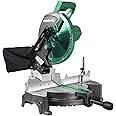
Metabo HPT C10FCGS Compound Miter Saw (10-Inch, Single-Bevel)
Category: Miter Saws
Metabo HPT C10FCGS is likely the best 10-inch miter saw for small workshops. It combines light weight, a 15 Amp motor, and precise stops for trim work. Miter Saws for tight shops benefit from its compact footprint and flip fence.
Metabo HPT C10FCGS: compact 10-inch miter saw for tight shops
Metabo HPT C10FCGS Compound Miter Saw (10-Inch, Single-Bevel) fits tight benches while supplying a 15 Amp motor. Metabo HPT C10FCGS keeps an unusually small footprint compared with full-size sliding Miter Saws. Metabo HPT Compound Miter Saw offers a flip fence that rises four inches for taller trim. C10FCGS Compound Miter Saw weighs 24.2 lbs, making jobsite transport more manageable.
Key specifications and measurements for layout and purchase decisions
- Blade size: 10 in
- Motor: 15 Amp
- No-load speed: 5,000 RPM (rotations per minute with no cutting load)
- Weight: 24.2 lbs
- Miter angle range: 0-52 left and right
- Bevel angle range: 0-45 left
- Miter stops: thumb-actuated positive stops
- Fence: large table with extended flip fence (rises 4 in)
- Clamping: vice clamping system
- Dust collection: dust collector attachment included
The saw’s specs above guide shop layout and material handling choices. The included dust collector attachment reduces airborne chips and simplifies cleanup. The 5-year Metabo HPT warranty provides long-term value for light contractors and hobbyists. The saw’s vice clamping system stabilizes narrow stock during repeatable miter cuts.
How do blade diameter and bevel range impact small shop workflows?
C10FCGS delivers deep trim cuts while minimizing bench footprint. A 10-inch blade reduces maximum crosscut compared to larger blades, yet suits baseboards and casings. Single-bevel means the blade tilts just left, which suits crown molding and compound trim. These design choices reduce bench intrusion while preserving the angles and accuracy needed for finish carpentry.
Cutting capability numbers to plan jobs and material handling
- Blade: 10 in (compact crosscut capacity versus 12 in)
- No-load speed: 5,000 RPM (indicates spindle speed before cutting)
- Bevel range: 0-45 left (single-bevel limits tilt direction)
- Miter range: 0-52 left/right (wide angle choices for trim)
- Weight: 24.2 lbs (portability metric for jobsite transport)
These numbers let you plan material feed and cycle time for trim and casework. A 5,000 RPM no-load speed balances cut quality and blade life for typical hardwood moldings. Allow extra setup time for compound cuts; bevel adjustments and miter stops require fine-tuning.
Choosing a small-workshop 10-inch miter saw for precise cuts
Metabo HPT C10FCGS Compound Miter Saw (10-Inch, Single-Bevel) balances accuracy and shop space for first-time buyers. Compared to 12-inch non-sliding models, this saw gives similar miter accuracy with less depth. Choose miter saws with positive miter stops (miter = angled cut) and thumb-actuated detents for fast repeatability. The C10FCGS includes thumb-actuated positive stops for common angles, speeding trim work. Compare motor rating to speaker wattage: 15 Amp indicates available cutting torque under load.
What fence offers and miter stops deliver repeatable trim cuts?
C10FCGS secures stock for repeatable trim cuts. Its extended flip fence rises four inches to support tall crown and base molding stock. The vice clamping system holds narrow trim without a separate jig, improving repeatability. Thumb-actuated positive miter stops cut common angles fast and reduce measurement errors.
Why Metabo HPT C10FCGS suits DIYers and small contractors
Metabo HPT C10FCGS Compound Miter Saw (10-Inch, Single-Bevel) serves DIYers and light contractors seeking portability and value. At $199.99 with a five-year warranty, the saw delivers strong upfront value. The lightweight 24.2 lb design reduces fatigue for mobile contractors and weekend DIY projects. The included dust attachment and vice clamp favor tidy jobs and fewer hold-down accessories.
Can a lightweight 10-inch miter saw keep accuracy during transport?
C10FCGS maintains alignment after normal transport. Its lighter weight aids pickup jobs but requires careful packing to prevent knocks. Transport with blade guard engaged and miter set at zero reduces accidental knocks. Service alignment after heavy drops; the 5-year warranty covers many defects but not misuse.
Common follow-up questions for buyers
Question: Will the C10FCGS cut crown molding? Yes; the saw handles most crown profiles when set for spring-coped cuts using the left-bevel tilt. Use the extended flip fence and test on scrap to confirm orientation and spring angles. If you need crown on large timbers, prefer a sliding 12-inch saw.
Question: How does this saw compare to a sliding miter saw? The C10FCGS sacrifices rip capacity for compactness compared to sliding saws. You gain portability and lower cost but lose long crosscut ability for wide boards. For trim, cabinetry, and window casings, the 10-inch saw often suffices and saves workspace. Budget, jobsite mobility, and required cut length determine which design works best.
Two follow-up searches readers will run next, with brief answers:
– How do I set up crown molding on a 10-inch miter saw? Answer: Use the flip fence, set the saw to spring-coped orientation, clamp stock with the vice, test cuts on scrap, and fine-tune bevel and miter stops (expect setup to take 5-15 minutes per profile).
– What blades and RPMs give clean cuts in hardwood trim? Answer: Use a 60-80 tooth 10-inch thin-kerf blade and run at the rated 5,000 RPM under load; feed stock steadily to avoid tear-out and match blade to wood species.
Practical buying tips and limitations
– If you need long crosscuts for 2x10s or wide boards, choose a sliding 12-inch model. The C10FCGS works best for trim, casings, and baseboards.
– Treat the 15 Amp rating like speaker wattage: higher amps sustain power under load. Also service alignment after heavy impacts.
– For first-time buyers used to audio gear, think in parallels: motor rating wattage, RPM frequency, and clamp quality speaker mounting stability.