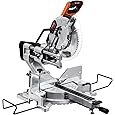
Metabo HPT C10FSHCT Sliding Compound Miter Saw
Category: Miter Saws
Choose the Metabo HPT C10FSHCT for precise cabinet and trim work. Its compact sliding design, 15-amp motor, and laser suit tight shop setups. This model belongs to Miter Saws used in finish carpentry.
When the Metabo HPT C10FSHCT Is Ideal for Fine Cabinetmaking
The Metabo HPT C10FSHCT Sliding Compound Miter Saw best fits small shops needing accurate, repeatable finish cuts. The saw s compact slide and laser marker reduce layout errors when you work near walls or benches. The unit ships with a 10-inch, 40T TCT blade and simple sliding system that minimizes rear clearance and simplifies fence setups. The saw s 40.7 lbs weight helps one person move it between truck and bench, improving shop workflow.
- Motor: 15 Amp
- Blade: 10 in, 40T, TCT (tungsten carbide tipped)
- Weight: 40.7 lbs
- Bevel range: 0-48 left/right
- Miter range: 0-60 right, 0-55 left
Metabo HPT C10FSHCT gives cabinetmakers the control they need for finish joinery. The included laser marker and LED improve alignment and cut verification in dim workshop corners. The compact slide and double-bevel capability let you set repeated angled cuts without constant repositioning. These traits reduce rework and improve fit on face-frame and frameless cabinet assemblies.
What includes help achieve cabinet joinery accuracy?
Metabo HPT C10FSHCT produces repeatable compound bevels for tight cabinet joints. The tested Metabo HPT Sliding Compound Miter Saw supports positive miter detents and wide angle ranges for common cabinet angles and crown modules. The C10FSHCT Sliding Compound Miter Saw uses a laser marker for blade-line preview and a 40T TCT blade to limit tear-out on painted or veneer surfaces. The combination of the laser, solid fence, and fine-angle indexing reduces trial-and-error cuts and speeds precise joinery.
Evaluating portable compound saws for trim and site carpentry
The Metabo HPT C10FSHCT Sliding Compound Miter Saw suits trim carpenters who need shop-level finish on jobsite installs. The saw s lightweight construction, compact slide, and included vise assembly help when you install baseboard or door trim on-site. The tool does not list soft-start, so you should plan safe startup procedures and stall protection where required. The saw s accessories, like the dust bag and 13mm box wrench, help you maintain the tool on the run.
Metabo HPT C10FSHCT improves mobility and reduces setup friction by weighing 40.7 lbs. The lighter mass means one installer can lift it into a van and carry it up a flight of stairs. The zero rear-clearance slide helps you position the saw against a wall or bench, saving setup space in tight job trailers. The practical impact is more working time and fewer repositioning steps when cutting long runs of trim.
How do portability and weight affect jobsite efficiency?
Metabo HPT C10FSHCT reduces transit time when moving between truck, scaffold, and workbench. Lighter tools require fewer crew members to handle them, which shortens setup and teardown times. A compact sliding system also means you can work close to walls and maintain a stable fence support for long trim pieces. Those gains lower labor costs and reduce fatigue across a multi-day install.
Comparing Metabo HPT C10FSHCT Versus Other Finish-Trim Saws
The Metabo HPT C10FSHCT Sliding Compound Miter Saw competes strongly with compact finish saws due to its sliding system and double-bevel flexibility. The tested Metabo HPT C10FSHCT miter saw offers wider bevel and miter ranges than many basic chop saws, and its 15-amp motor handles denser hardwood trim better than lower-amp alternatives. The unit lacks published rpm, arbor size, and exact cutting capacity in provided specs, so you should confirm those critical numbers before comparing to 12-inch sliding competitors. The saw s 5-year warranty is useful, though the warranty terms are not fully detailed in available documentation.
C10FSHCT contrasts with fixed-head finish saws by offering deeper crosscut and compound capacity. Larger 12-inch sliding saws give deeper cutting depth but increase weight and footprint. For finish trim that includes thicker newel posts or tall baseboard, a 12-inch saw may still be better; for daily cabinet faces and casing, the 10-inch sliding saw balances precision and portability.
Which cut types most reveal differences in finish quality?
The Metabo HPT Sliding Compound Miter Saw produces cleaner results on crosscuts and compound miters than coarse-toothed blades. Finish quality differences appear most on bevel cuts, crown molding spring cuts, and end grain on hardwoods. When you need razor finish on painted or veneer pieces, use a higher-tooth-count finish blade and slow steady feed to minimize splintering. Backer boards, sacrificial fences, and test cuts on scrap stock further reduce tear-out and dial in blade alignment.
Missing technical details that affect buyer comparisons
- Arbor size: not specified confirm compatibility with aftermarket blades
- Power voltage and rpm: not published verify motor speed and local voltage requirements
- Cutting capacity and physical dimensions: not given measure for truck and bench fit
- Warranty terms and safety certifications: 5-year warranty stated, terms undocumented
Before purchase, ask the seller for arbor diameter, no-load RPM, and maximum crosscut depth at 90 and 45 . Those numbers determine blade selection, cut capacity, and whether the saw replaces a larger model. If you buy online, request verification photos of the placard showing voltage and certification marks to ensure site compliance.
Common buyer follow-up questions and concise answers
How does blade tooth count affect finish on trim? Higher tooth counts (for example, 60T versus 40T) reduce tear-out on veneer and painted surfaces but cut more slowly and generate more heat. Use a 40T for general-purpose trim and a 60T or dedicated finish blade for painted or veneered panels.
Can this saw replace a 12-inch sliding miter saw for crown molding? The tested Metabo HPT C10FSHCT often handles typical crown profiles and casing, but very tall crown or deep crown backcuts may still require a 12-inch saw for full-capacity single-pass cuts. Match cutting capacity to the largest molding you routinely install.
What power and cord requirements should first-time buyers confirm? Verify the saw s voltage and cord type with the seller; the listed 15-amp motor requires a compatible circuit and heavy-duty extension cable for reliable performance on site.