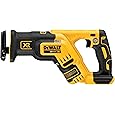
DEWALT 20V MAX XR Compact Reciprocating Saw, Model DCS367P1
Category: Reciprocating Saws
The DEWALT 20V MAX XR Compact Reciprocating Saw, Model DCS367P1 fits tight stud bays with a 14.5-inch body. Its short length and 1-1/8-inch stroke improve control and reduce binding. Reciprocating Saws built for access make stud-bay cutting faster and safer.
Why the DEWALT DCS367P1 Excels at Tight Stud Cuts
DEWALT 20V MAX XR Compact Reciprocating Saw, Model DCS367P1 fits tight stud bays with a 14.5-inch body. Reciprocating Saws built for access prioritize short length and balanced weight for confined cuts. The brushless motor and up to 2,900 SPM (strokes per minute) deliver fast cuts while keeping vibration manageable. This DEWALT compact reciprocating saw also includes a keyless 4-position blade clamp and built-in LED for dark cavities.
How do blade choice and length affect tight stud cuts?
DEWALT DCS367P1 blade choice determines cut speed, kerf width, and clearance. Choose shorter blades to limit overhang when working between studs and inside narrow bays for less binding. Use bi-metal blades with 6-10 TPI (teeth per inch) for fast demolition in dimensional lumber and 10-14 TPI for faster, cleaner cuts. Reserve longer 9-inch blades only when extra reach is essential, because longer blades reduce control in confined wall cavities.
Compact reciprocating saw features that improve access in stud bays
DEWALT 20V MAX XR Compact Reciprocating Saw, Model DCS367P1 offers compact ergonomics for deeper stud-bay reach. Its 14.5-inch tool length and 5 lb tool-only mass reduce binding in narrow cavities and let you pivot the saw easily. The keyless four-position blade clamp lets users orient the blade for flush cuts, plunge cuts, or offset angles without extra tools. The bright LED lighting improves target visibility when cutting into dark wall cavities behind plumbing and wiring.
How does motor power and stroke rate affect tight cuts?
Brushless motor delivers higher efficiency and sustained torque for stubborn stud cuts. The tested DEWALT DCS367P1 reciprocating saw pairs that motor with a 1-1/8-inch stroke to remove material quickly while keeping vibration controlled. Higher SPM increases cut rate but may chatter in thin studs; the 2,900 SPM maximum provides a practical balance between speed and control. Use the variable-speed trigger to match blade type and material for the cleanest results.
DEWALT DCS367P1 Battery Runtime and Accessories for Stud Cuts
DEWALT 20V MAX XR Compact Reciprocating Saw, Model DCS367P1 claims up to 2.5x runtime with 20V MAX batteries versus older DEWALT brushed models. The advertised 5.0 Ah battery cell increases run length, but the product notes are ambiguous about whether the battery and charger ship with the saw or if the listing is tool-only. Buyers should confirm battery and charger inclusion with the retailer to avoid surprise purchases. Expect a 5.0 Ah pack used for demolition to complete multiple 2×4 removals per charge under typical conditions.
What safety and setup steps make tight stud cuts safer?
User setup reduces kickback and improves cut accuracy. Secure the work area, mark stud lines, and locate electrical wiring and plumbing before cutting to avoid dangerous strikes. The DCS367P1 Reciprocating Saw’s bright LED and keyless clamp speed safe operation in low light by reducing hesitation and awkward repositioning. Always wear cut-resistant gloves, eye protection, and a dust mask when cutting inside walls to protect against debris and airborne dust.
Common follow-up buyer questions for DCS367P1 runtime and compatibility
- Q: Does the saw come with a battery and charger? A: Listings vary; confirm whether the model is sold as “tool-only” or as a kit that includes the 5.0 Ah battery and charger.
- Q: What blade length is best for cutting 2×4 studs inside walls? A: Use a 6-inch or 9-inch bi-metal blade with 6-10 TPI for efficient, controlled cuts in 2×4 lumber.
- Q: How many stud cuts per charge can I expect from a 5.0 Ah pack? A: Under light-to-moderate demolition you should complete several 2×4 removals per charge; heavy continuous demolition will reduce that number significantly.