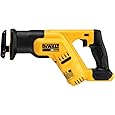
DEWALT 20V MAX Cordless Reciprocating Saw Kit (Model DCS387P1)
Category: Reciprocating Saws
Choose the DEWALT DCS387P1 for tight spaces, or Milwaukee M18 Fuel for sustained torque. DEWALT arrives as a kit with a 5.0Ah battery included, while Milwaukee emphasizes motor and electronics variations. Both models sit squarely in the compact Reciprocating Saws category for contractors and serious DIYers.
Comparing DEWALT DCS387P1 and Milwaukee M18 Fuel compact saws
DEWALT 20V MAX Cordless Reciprocating Saw Kit (Model DCS387P1) and Milwaukee M18 Fuel differ in size, stroke feel, and control electronics. DEWALT DCS387P1 targets compact access with a 14.5-inch overall length that fits between studs. Milwaukee M18 Fuel tools rely on POWERSTATE brushless motors and REDLINK Plus electronics to sustain torque under load. Those engineering differences make the reviewed DEWALT reciprocating saw kit friendlier in confined framing bays and the M18 Fuel better for continuous, heavy demolition cuts.
DEWALT DCS387P1 core specifications for side-by-side comparison
- Power source: 20V MAX Li-Ion
- Battery capacity: 5.0Ah (DCB205 included)
- Stroke length: 1-1/8 inch
- Strokes per minute: 0-2900 spm
- Total length: 14.5 inch
- Blade clamp: keyless lever-action, 4-position
How do motor power and stroke length affect cutting performance?
DEWALT Reciprocating Saw Kit delivers faster chip removal with its 1-1/8-inch stroke and up to 2900 strokes per minute. Milwaukee M18 Fuel units produce higher sustained torque thanks to their POWERSTATE brushless motors and REDLINK Plus control systems. Shorter, aggressive strokes clear material quickly in metal and PVC while higher torque helps when cutting thick, knotty lumber or rebar. Together those attributes determine whether a saw rips fast or holds speed under a heavy load, which affects task selection on demolition or plumbing jobs.
Evaluating battery life, power and speed of compact reciprocating saws
DEWALT 20V MAX Cordless Reciprocating Saw Kit (Model DCS387P1) balances power and runtime by shipping with a 5.0Ah battery that emphasizes longer run between charges. Milwaukee M18 Fuel offers more battery capacity choices across the M18 family, which lets users trade lower weight for faster swaps or larger cells for extended runtime. Both platforms use brushless motors and variable speed triggers to manage stroke rate, which directly changes current draw and effective runtime. Those trade-offs mean you choose battery size based on expected cutting duty and how long you need the saw to run on a single charge.
What real-world runtime can you expect from 1.5Ah to 5.0Ah batteries?
DEWALT 20V MAX Cordless Reciprocating Saw Kit (Model DCS387P1) typically runs longest on its included 5.0Ah cell, often delivering many moderate cuts across a half-day of intermittent demo. Smaller batteries such as 1.5Ah or 2.0Ah yield shorter runtimes but reduce tool weight for overhead work. Expect runtime to vary widely: light pruning or PVC sawing may allow multiple hours on 5.0Ah, while heavy metal or thick lumber may deplete the same battery in 20-60 minutes. To plan jobs, match battery capacity to cut severity and keep a rotation of charged packs for continuous work at job sites.
Choosing between DEWALT DCS387P1 and Milwaukee M18 Fuel for pros
DEWALT 20V MAX Cordless Reciprocating Saw Kit (Model DCS387P1) suits pros who prioritize compactness, included 5.0Ah battery, and positional blade options for flush cutting. The DCS387P1 cordless reciprocating saw kit gives four blade positions, a pivoting shoe, and an LED for dark cavities that contractors value in remodel and plumbing tasks. Milwaukee M18 Fuel choices favor pros who need maximum torque, firmware-managed performance, and flexible battery ecosystems across heavy trades. In practice, choose the DEWALT for tight-space repeatability and the Milwaukee for heavier continuous demolition runs.
Which blade types are best for demolition or tight plumbing cuts?
DEWALT DCS387P1 accepts coarse-pitched demolition blades and fine-tooth flush-cut blades for plumbing and trim work. For demolition, use carbide-grit or aggressive bi-metal blades that resist heat and cut through nails, wood, and composite materials quickly. For tight plumbing or finish cuts, use thin, fine-tooth wood or metal-cutting blades that reduce chatter and fit close to fixtures. Blade selection directly affects cutting speed, finish quality, and motor load, so match blade tooth geometry to material and keep spares for rapid swaps on site.
Follow-up questions contractors search after this comparison
Which saw is lighter for overhead work and long sessions answered: DEWALT DCS387P1 generally feels lighter for confined overhead tasks because its 14.5-inch footprint and included battery balance weight low. How fast can you swap blades and batteries answered: both manufacturers offer keyless or tool-free blade changes and single-socket battery swaps, with practical change times of under a minute for blades and 20-30 seconds for batteries in routine conditions. Do aftermarket blades or batteries affect warranty and performance answered: aftermarket high-capacity batteries may increase runtime but could void specific manufacturer warranty terms, so verify vendor warranty policies before purchase and prefer OEM cells for guaranteed compatibility.