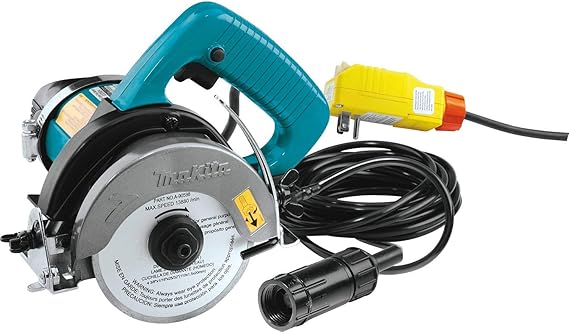
Yes, the Makita 4101RH 5″ Masonry Saw suits most DIY tile installers. It cuts porcelain and ceramic up to 1-5/8 inch depth. This tool fits naturally among Tile & Masonry Saws for compact wet cutting.
Evaluating the Makita 4101RH for DIY tile cutting tasks
The Makita 4101RH provides corded wet cutting power with a compact footprint for small renovation jobs. The saw uses a 7.9 AMP motor on standard 120V AC and turns a 5-inch diamond blade for efficient wet cutting. Owners find this model competitive within Tile & Masonry Saws for portability, safety features, and straightforward maintenance. The saw’s 6.5-pound weight eases transport and ladder or bench work for weekend installers.
Key specifications and included accessories for wet tile cutting
Notable specs and included items illustrate what the saw supplies for a jobsite ready setup. The package focuses on wet cutting, safety, and immediate usability for a DIYer.
- Power: 7.9 AMP, 120V AC (corded electric)
- Blade: 5 in diameter; arbor size 3/4 in; blade side left
- Cut capacity: up to 1-5/8″ at 90 , 1″ at 45
- Weight: 6.5 lb
- Includes: Diamond Wheel A-90934, Hex Wrench 783203-8, Wrench 781011-1
- Water accessories: 15 ft tubing, water pressure regulator, water valve
- Safety & controls: GFCI plug (ground-fault circuit interrupter), lock-on button
How well does a handheld saw handle porcelain and ceramic?
Makita Masonry Saw cuts dense porcelain effectively when used wet and with controlled feeds.
Porcelain requires more time and patience than ceramic due to higher density and lower porosity. Use the included Diamond Wheel A-90934 or a continuous-rim porcelain blade to reduce chipping and achieve cleaner edges. Make shallow multiple passes when you approach the saw’s 1-5/8″ depth limit to avoid overheating or tearing the tile. Proper blade selection and slow steady pressure deliver professional-looking cuts on harder tile materials.
Comparing power, blades, and ergonomics for DIY tile installers
The 4101RH balances motor torque, blade size, and user ergonomics for handheld wet cuts on most residential projects. The 5-inch blade limits maximum single-pass depth but improves control for small-format tiles and trims. The left-side blade placement affects flush cuts and guides; plan tile orientation accordingly when making rip cuts. The adjustable depth-of-cut feature reduces overcut and helps make consistent, repeatable cuts on field tiles and trim pieces.
What PPE and precautions stop tile dust and flying shards?
Compact 5-inch masonry saw for tile and concrete eliminates most airborne dust by using wet cutting methods.
Wear eye protection, gloves, and hearing protection for every cutting session to stop flying shards and splashes. Choose a respirator rated N95 or P100 (filters for particulate matter) when you cut dry or when slurry dries during cleanup. Use the included 15-foot tubing and regulator to keep a steady water feed and to suppress silica dust effectively during wet cutting. Plug the saw into the included GFCI (ground-fault circuit interrupter) to reduce electric shock risk when using water on site.
Real-world DIY results with the Makita 4101RH on tiles
This Makita masonry saw performed practically for weekend tilers on patios, backsplashes, and small shower projects. Setup required only a nearby 120V outlet and a garden hose connection using the supplied tubing and regulator. Users reported clean straight cuts on ceramic and acceptable edges on porcelain when using the included blade and slow feed. The saw s low weight and lock-on button aid longer cuts and reduce operator fatigue on medium jobs.
Is on-site set up and cleanup practical for weekend tile jobs?
The tested Makita 4101RH masonry saw assembles and tears down quickly for typical weekend projects.
You need around 10-20 minutes to unpack, connect the 15 ft tubing, and test water flow and power before cutting. The package s water valve and pressure regulator control slurry volume, minimizing runoff when you work on paved or temporary surfaces. For cleanup, collect slurry with a wet vacuum or let solids settle in a bucket, then dispose of slurry according to local regulations. The saw lacks published RPM, dimensions, and warranty terms, so plan tool transport and expect to source replacement blades from Makita or third-party diamond blade vendors.
Common follow-ups DIYers search next include capability, cost, and blade lifecycle questions. Can it cut thicker natural stone? The saw limits you to about 1-5/8″ depth, so thicker stone needs multiple passes or larger saw rental. How much do replacement blades cost? Makita diamond wheels and equivalent blades typically range from $25 to $80 depending on rim type. Do you ever dry cut with this saw? Dry cutting increases silica dust dramatically; stick to wet cutting and use respirators when dry work occurs.