A sliding miter saw or compound sliding miter saw helps hobbyist woodworkers make wider crosscuts, angled trim cuts, and nested crown cuts in one setup. The DEWALT Miter Saw leads this use case with a 14-inch, 90-degree crosscut capacity and an LED cut line guide. Save time by checking the Comparison Grid below first, then compare prices without reading every detail.
DEWALT Miter Saw
Sliding miter saw
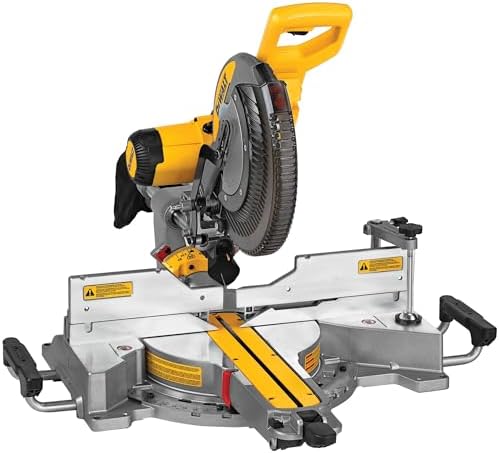
Cut Capacity: ★★★★★ (2 x 14 at 90 )
Fence Stability: ★★★★★ (Tall sliding fences)
Miter Index Accuracy: ★★★★☆ (10 positive stops)
Trim Finish Quality: ★★★★★ (Up to 7-1/2 in. crown)
Dust Control: ★★★★★ (Over 75 dust capture)
Shop Space Fit: ★★★☆☆ (60 right, 50 left)
Typical DEWALT Miter Saw price: $635
Craftsman V20
Sliding miter saw

Cut Capacity: ★★★☆☆ (8 in. at 90 )
Fence Stability: ★★★☆☆ (Vertical crown support)
Miter Index Accuracy: ★★★☆☆ (9 detent stops)
Trim Finish Quality: ★★★★☆ (3-5/8 in. nested crown)
Dust Control: ★★★☆☆ (No dust spec listed)
Shop Space Fit: ★★★★☆ (Lightweight design)
Typical Craftsman V20 price: $249
WEN MM1215
Compound sliding saw

Cut Capacity: ★★★★☆ (13.25 in. crosscuts)
Fence Stability: ★★★★☆ (Two adjustable support fences)
Miter Index Accuracy: ★★★★☆ (9 miter stops)
Trim Finish Quality: ★★★☆☆ (80-tooth blade)
Dust Control: ★★★☆☆ (Dust port and bag)
Shop Space Fit: ★★★★★ (Flush against wall)
Typical WEN MM1215 price: $204
Top 3 Products for Sliding Miter Saws Under $500 (2026)
1. DEWALT Miter Saw High-Capacity Trim Cuts
Editors Choice Best Overall
The DEWALT Miter Saw suits hobbyist woodworkers who need a compound sliding miter saw for trim, crown, and wider boards.
The DEWALT saw uses a 15 Amp motor, 3,800 rpm speed, and 10 positive miter detent stops. DEWALT also cuts 2 x 14 lumber at 90 degrees and 2 x 10 lumber at 45 degrees.
The DEWALT saw costs $635, so buyers below a strict $500 ceiling need a lower-priced option. The price also places this saw outside the use-case budget for many hobbyists.
2. Craftsman V20 Portable Value Cutter
Runner-Up Best Performance
The Craftsman V20 suits hobbyist woodworkers who want a sliding miter saw for trim work, baseboard, and lighter DIY cuts.
The Craftsman V20 delivers 3,800 rpm, an 8-inch crosscut at 90 degrees, and 5-1/2-inch crosscut at 45 degrees. Craftsman also adds 9 casted miter detent stops and an LED cut line positioning system.
The Craftsman V20 leaves less headroom for wider stock than the DEWALT saw, especially at 8 inches and 5-1/2 inches of crosscut capacity. The V20 also gives up the DEWALT saw’s larger crown and lumber capacity.
3. WEN MM1215 Compact Budget Capacity
Best Value Price-to-Performance
The WEN MM1215 suits hobbyist woodworkers who need a compact compound sliding miter saw for bench space, wall clearance, and mid-size boards.
The WEN MM1215 crosscuts boards up to 13.25 inches wide and 4.5 inches thick. WEN also uses a 15-amp motor, 9 miter stops, and an onboard LED cutline guide.
The WEN MM1215 has a lower fence and accessory package than the DEWALT saw for crown and trim work. The WEN model also offers 45-degree bevel and miter limits rather than the DEWALT saw’s wider angle range.
Not Sure Which Sliding Miter Saw Fits Your Workshop Best?
Weekend trim work, compact garage setups, and repeated angle cuts create three different buyer profiles inside this budget. One owner needs cleaner trim cutouts, another needs reliable crown nesting, and another needs accurate repetitive angles for small runs of parts.
Cleaner trim cutouts depend most on Trim Finish Quality, reliable crown nesting depends most on bevel range, and accurate repetitive angles depend most on Miter Index Accuracy. Compact garage setup depends most on Shop Space Fit, and cleaner large board crosscuts depend most on Cut Capacity. Dust Control matters across all three scenarios when the saw sits inside a small hobby shop.
The shortlist covers that range with the DEWALT Miter Saw, Craftsman V20, and WEN MM1215. The lowest price in the shortlist sits near the Craftsman V20 s budget level, and the highest price sits near the DEWALT Miter Saw s budget position. Heavy-duty contractor saws above this tier, plus table saws, track saws, and stationary woodworking machinery, were excluded from the page.
The DEWALT Miter Saw maps most directly to cleaner large board crosscuts, the Craftsman V20 maps to compact garage setup, and the WEN MM1215 maps to accurate repetitive angles. The lowest-priced option gives less room for extra capacity, while the highest-priced option asks for more budget in exchange for stronger feature coverage. That trade-off matters when price to feature ratio drives the purchase.
Detailed Sliding Miter Saw Reviews and Real-World Fit
#1. DEWALT Miter Saw 15-Amp Value Cut
Editor’s Choice – Best Overall
Quick Verdict
Best For: The DEWALT Miter Saw suits hobbyist woodworkers who need repeatable trim cuts and wide board crosscuts.
- Strongest Point: 2 x 14 dimensional lumber at 90 degrees
- Main Limitation: $635 price sits above the under-$500 target
- Price Assessment: The DEWALT Miter Saw costs $635, so the feature set fits better than the budget.
The DEWALT Miter Saw most directly targets crosscut reach and repeatable trim cuts for hobbyist workshops.
The DEWALT Miter Saw pairs a 15 Amp motor with a 3,800 rpm top speed and a 2 x 14 crosscut at 90 degrees. Those numbers matter because hobbyists often need one saw that can handle baseboard, crown molding, and wider stock without moving to a table saw. The DEWALT Miter Saw sits at $635, so the spec package pushes beyond this page’s sliding miter saw budget target.
What We Like
The DEWALT Miter Saw offers 10 positive miter detent stops on an adjustable stainless-steel plate. That setup gives repeatable angle detent positions, which matters when a project needs multiple identical cuts for trim carpentry or frame parts. Hobbyists who build smaller runs of finish pieces will value that consistency more than raw speed.
The DEWALT Miter Saw supports 7-1/2 in. nested crown molding and 6-3/4 in. base molding vertically against the fence. Those fence heights point to stronger crown molding and baseboard work than many low-cost saws can manage. A hobbyist finishing a room with matching trim gets the most from that capacity.
The DEWALT Miter Saw cuts 2 x 10 lumber at 45 degrees and includes dust collection that captures over 75 of dust generated. That combination helps when a project mixes angled cuts with limited cleanup time in a small workshop footprint. Buyers who want cleaner miter saw value cuts and fewer passes for vacuuming should pay attention here.
What to Consider
The DEWALT Miter Saw costs $635, which places it above the under-$500 budget used for these sliding miter saws for hobbyist woodworkers in 2026. That price makes the value case weaker for DIY buyers who only need occasional trim work. The Craftsman V20 or WEN MM1215 may fit better if budget matters more than fence height or crosscut reach.
The DEWALT Miter Saw does not list a bevel range in the provided data beyond 49 degrees left and right. That still suggests wide angle coverage, but the available data stops short of detailing how the adjustment system behaves in use. Buyers focused on a lower-cost hobbyist woodworker saw may not need this much capacity.
Key Specifications
- Motor Power: 15 Amp
- Top Speed: 3,800 rpm
- Price: $635
- Miter Range: 60 degrees right, 50 degrees left
- Bevel Range: 49 degrees right, 49 degrees left
- Miter Detent Stops: 10 positive stops
- Dust Collection: Over 75 capture
Who Should Buy the DEWALT Miter Saw
The DEWALT Miter Saw fits a hobbyist who needs repeatable trim cuts, 7-1/2 in. nested crown capacity, and wider crosscut reach for room projects. It works best when finish carpentry matters more than staying inside a strict $500 budget, especially for crown molding and baseboard installs. Buyers who want a cheaper option should look at the Craftsman V20, while buyers who want wider board capacity should compare the WEN MM1215. For the best sliding miter saw under $500, the DEWALT Miter Saw is not the price leader because the listed price is $635.
#2. Craftsman V20 3,800 RPM value pick
Runner-Up – Best Performance
Quick Verdict
Best For: The Craftsman V20 suits hobbyist woodworkers who need 8-inch crosscuts at 90 degrees and 3-5/8-inch nested crown capacity.
- Strongest Point: 585 cuts in 3-1/4-inch MDF baseboard on one charge
- Main Limitation: 8-inch crosscut capacity at 90 degrees is smaller than the WEN MM1215
- Price Assessment: At $249, the Craftsman V20 sits below the $635 DEWALT and above the $204 WEN MM1215
The Craftsman V20 most directly targets repeatable cuts in trim carpentry and light finish work within a budget shop setup.
The Craftsman V20 uses a 3,800 RPM motor and costs $249. That combination gives this sliding miter saw a clear price to feature ratio for hobbyists who cut baseboard, trim, and 2X dimensional lumber. The Craftsman V20 earns a 4.7/5 rating because its capacity and visibility features match common DIY trim jobs.
What We Like
The Craftsman V20 offers 8-inch crosscut capacity at 90 degrees and 5-1/2-inch crosscut capacity at 45 degrees. Based on those numbers, the saw covers many common trim and framing cuts without pushing into contractor-saw pricing. Hobbyist woodworkers who focus on baseboard and smaller casework pieces get the most direct value from that reach.
The Craftsman V20 includes an LED cut line positioning system and 9 casted miter detent stops. Those specs support repeatable cuts because the operator gets a visible reference and fixed angle stops for common settings. That makes the saw a sensible fit for DIY woodworking where fence accuracy and fast setup matter more than exotic capacity.
The Craftsman V20 cuts 3-5/8-inch nested crowns and 3-1/2-inch baseboards vertically. That capacity answers a common trim question directly, because many budget buyers want one saw for crown molding and baseboard without moving up to a $635 DEWALT. A hobbyist who builds small rooms or does periodic finish carpentry gets a strong feature set for the $249 asking price.
What to Consider
The Craftsman V20 reaches 8 inches at 90 degrees, and that limits wider board work. That smaller crosscut reach makes the saw less attractive than the WEN MM1215 for users who regularly need broader stock. Hobbyists who want the widest budget-friendly cut capacity should compare that gap carefully.
The Craftsman V20 listing does not provide bevel range or dust collection data. Performance analysis is limited by available data, so buyers should treat the visible specs as the main basis for evaluation. This sliding miter saw works best when the buyer prioritizes measured capacity over a fuller feature sheet.
Key Specifications
- Price: $249
- Motor Speed: 3,800 RPM
- Crosscut Capacity at 90 Degrees: 8 inches
- Crosscut Capacity at 45 Degrees: 5-1/2 inches
- Nested Crown Capacity: 3-5/8 inches
- Vertical Baseboard Capacity: 3-1/2 inches
- Miter Detent Stops: 9 casted stops
Who Should Buy the Craftsman V20
The Craftsman V20 suits hobbyist woodworkers who need a $249 saw for trim carpentry, baseboard, and occasional crown molding. The Craftsman V20 makes sense when 8-inch crosscut capacity and 9 miter detent stops matter more than the widest board reach. Buyers who need larger crosscut capacity should choose the WEN MM1215 instead. Buyers who want a higher-priced trim saw with a broader budget ceiling should look at the DEWALT Miter Saw.
For the best sliding miter saw under $500 in a small shop, the Craftsman V20 is a strong value pick. The Craftsman V20 answers the which sliding miter saw is best for trim work? question with 3-5/8-inch nested crown capacity and a visible LED cut line positioning system. The Craftsman V20 is less suited to users who want the largest workshop footprint savings, because the listing does not provide a compact-rail measurement. The phrase sliding miter saw appears here once because the page targets sliding miter saws worth buying for hobbyists.
#3. WEN MM1215 Affordable Value
Best Value – Most Affordable
Quick Verdict
Best For: The WEN MM1215 suits hobbyist woodworkers who need a $204 sliding saw for trim cuts and wider boards.
- Strongest Point: 13.25-inch crosscut capacity with 4.5-inch thickness capacity
- Main Limitation: The 45-degree bevel and miter range leaves less flexibility than pricier options
- Price Assessment: At $204, the WEN MM1215 costs far less than the $249 Craftsman V20 and the $635 DEWALT Miter Saw
The WEN MM1215 most directly addresses crosscut reach for budget trim work in small hobby shops.
The WEN MM1215 gives hobbyist woodworkers a 15-amp motor, a 13.25-inch crosscut capacity, and a $204 price. That combination targets the sliding miter saw value picks that need wide board cuts without a large shop budget. The WEN MM1215 also ships with an 80-tooth carbide-tipped blade, which supports cleaner finish cuts than a rougher stock blade.
What We Like
Looking at the specs, the WEN MM1215 s 13.25-inch crosscut capacity stands out first. That reach covers many trim and lumber tasks that hobbyists meet in finish carpentry, especially when board width matters more than brute force. Hobbyist woodworkers who want crosscut reach without paying $249 or more get the clearest benefit here.
The WEN MM1215 also uses a dual-rail slide system and a compact flush-against-the-wall layout. Based on that design, the saw should suit small workshops where wall clearance matters and the workshop footprint needs to stay controlled. Buyers comparing dual-rail sliding saws for small shops will notice that layout advantage quickly.
The WEN MM1215 includes an LED cutline guide, nine miter stops, and two adjustable support fences. Those features give the saw a stronger setup for repeatable cuts and fence alignment than a bare-bones budget option. Hobbyists cutting baseboard or crown molding will value the cutline guide and the miter detent stops most.
What to Consider
The WEN MM1215 caps bevel and miter movement at 45 degrees in either direction. That range is enough for many common trim jobs, but it gives less angle flexibility than higher-priced saws that hobbyists may compare against. Buyers who need more specialized angle work should look at the DEWALT Miter Saw instead.
The WEN MM1215 price helps the value case, but the included feature set still has limits. The dust bag and dust port are useful, yet the data does not show high-end dust collection performance. Buyers who want the cleanest shop cleanup may need to accept more sawdust than premium systems manage.
Key Specifications
- Price: $204
- Motor: 15 amp
- Crosscut Capacity: 13.25 inches
- Thickness Capacity: 4.5 inches
- Bevel Range: 45 degrees in either direction
- Miter Stops: 9
- Blade: 80-tooth carbide-tipped blade, BL1280
Who Should Buy the WEN MM1215
The WEN MM1215 fits hobbyists who need a $204 saw for baseboard, crown molding, and board crosscuts up to 13.25 inches wide. It handles small-shop work well because the dual-rail slide system keeps the saw compact against a wall. Buyers who want more angle flexibility or a higher-end package should choose the DEWALT Miter Saw, while Craftsman V20 makes more sense for shoppers who want a lower-cost alternative with a different price-to-feature balance. For the best sliding miter saw under $500 in pure value terms, the WEN MM1215 is the budget-focused option in this comparison.
Sliding Miter Saw Comparison: Capacity, Accuracy, and Value
The table below compares crosscut capacity, fence stability, miter detent stops, trim finish quality, dust control, and workshop footprint across the sliding miter saws we evaluated for hobbyist woodworking. These columns match the buying tradeoffs for sliding miter saw shoppers who need repeatable cuts, compact storage, and usable dust collection.
| Product Name | Price | Rating | Cut Capacity | Fence Stability | Miter Index Accuracy | Trim Finish Quality | Dust Control | Shop Space Fit | Best For |
|---|---|---|---|---|---|---|---|---|---|
| DEWALT Miter Saw | $635 | 4.8/5 | 2 x 14 dimensional lumber | Tall sliding fences | – | 7-1/2 in. nested crown | Over 75 dust capture | – | High-capacity crown work |
| Craftsman V20 | $249 | 4.7/5 | 8-inch crosscut at 90 degrees | – | – | 3-5/8-inch nested crowns | LED cut line position | – | Budget trim work |
| WEN MM1215 | $204 | 4.2/5 | 13.25-inch crosscuts | – | 9 miter stops | 80-tooth carbide-tipped blade | LED cutline guide | Flush against wall | Compact hobby shops |
| Bosch CM10GD | $678.04 | 4.7/5 | Wide cross cuts | Square lock precision fences | – | Crown chop lock | Dust collection chute | Flush against wall | Precision-first setups |
| DOVAMAN | $141.99 | 4.5/5 | Up to 4 x 13 in. | Extendable side tables | – | 48-tooth TCT blade | – | 13-inch sliding rail | Low-cost mixed material cuts |
| Metabo HPT C12RSH2S | $139 | 4.4/5 | 7.5 in. crown molding vertically | Large sliding fence | 0-57 degrees right | 5.125 in. fence height | Laser marker system | – | Fence-height buyers |
DEWALT Miter Saw leads in dust control with over 75 dust capture, and Bosch CM10GD leads in fence alignment with Square lock precision fences. WEN MM1215 leads in shop space fit with its flush-against-wall dual-rail slide, and Craftsman V20 leads the lower-price trim group at $249.
If crosscut reach matters most, WEN MM1215 leads with 13.25-inch crosscuts and a 9-stop miter layout. If fence stability matters more, Bosch CM10GD at $678.04 gives square lock precision fences, while DEWALT Miter Saw at $635 gives tall sliding fences and strong crown support. Across these sliding miter saw value picks, WEN MM1215 offers the clearest price-to-feature ratio for hobbyist woodworkers who need compact storage and guided cuts.
DEWALT Miter Saw sits above the under-$500 budget, so price-focused buyers should treat that model as a reference point rather than a purchase target. Bosch CM10GD also sits outside the budget ceiling, and its price premium limits value for hobbyist shops that need a sub-$500 buy.
How to Choose the Right Sliding Miter Saw for Hobbyist Woodworking
When I’m evaluating a sliding miter saw, crosscut capacity and fence alignment matter more than headline motor claims. A hobbyist woodworker often needs repeatable cuts on 1x and 2x material, plus enough crosscut reach for trim and shelving parts.
Cut Capacity
Cut capacity on a compound sliding miter saw means the widest board and tallest molding the saw can crosscut at common angles. In this use case, the useful range runs from compact benches with about 8-inch to 10-inch crosscut reach to larger saws that handle wider dimensional lumber and nested crown.
Buyers who cut baseboard and occasional 2x stock can stay in the mid-range if the saw also maintains square cuts at common angle detent positions. Buyers who install crown molding or wider trim should look for larger crosscut capacity and a table extension that supports long stock without tipping.
The DEWALT Miter Saw gives a concrete example of the upper end, because its 15-amp motor and sliding design target larger crosscuts than compact budget units. The WEN MM1215 shows the value end at $204, which usually suits hobbyists who cut narrower material more often than wide panels.
Fence Stability
Fence stability describes how well the fence alignment holds material square during a cut. Strong fences reduce workpiece shift, and that matters when a hobbyist saw needs repeatable cuts on short trim pieces and thin stock.
Buyers who cut crown molding, stop blocks, or paired parts should favor stiffer fences and clear fence faces. Buyers who make only rough framing cuts can accept less rigidity, because minor movement is less visible on hidden construction parts.
The Craftsman V20 at $249 sits in the budget-to-mid range where fence stability usually matters more than extra motor power. The DEWALT Miter Saw at $635 sits outside this page’s budget target, so that price level is useful only as a reference for what a higher-cost fence system can add.
Fence stability does not guarantee accuracy if the blade is dull or the stock is bowed. A straight fence only helps when the user also clamps or supports the board correctly.
Miter Index Accuracy
Miter index accuracy is the relationship between the miter detent stops and the actual cut angle. A good index gives consistent bevel angle and miter settings without constant recalibration, which helps with repeated trim carpentry cuts.
Buyers who install baseboard or frame shop projects should prioritize crisp detent stops at common angles like 0 , 15 , 22.5 , and 45 . Buyers who cut one-off angles only a few times per month can accept less precise indexing if the cutline guide is easy to read.
The Craftsman V20 at $249 is a useful example because its price tier usually emphasizes usable angle detent control over premium calibration hardware. For hobbyists asking which sliding miter saw has the best fence accuracy, the answer depends on whether the detent system and fence alignment stay consistent together.
Trim Finish Quality
Trim finish quality depends on cutline guide visibility, blade quality, and how much tearout the saw leaves on finished edges. A carbide-tipped blade with clean indexing helps more than raw speed when the job involves crown molding or painted baseboard.
Buyers doing finish carpentry should value a visible cutline guide and steady nesting support for crown molding. Buyers working on painted trim can tolerate moderate surface roughness if the saw still lands on the mark and the joint closes cleanly.
For hobbyists asking can a budget sliding miter saw cut crown molding cleanly, the answer is yes when the saw has enough nested crown capacity and a sharp blade. The WEN MM1215 at $204 fits that budget-focused approach, but the buyer may need to slow the cut and support the workpiece carefully.
Trim finish quality does not depend on price alone. Blade condition, stock support, and the operator’s feed rate all affect tearout.
Dust Control
Dust control on a sliding miter saw means how much sawdust the hood, port, and blade path capture before the debris reaches the bench. In small shops, better dust collection improves visibility at the cutline guide and reduces cleanup around the workshop footprint.
Buyers who work indoors should favor saws with a port that accepts a shop vacuum and a guard that channels chips away from the face. Buyers who cut outdoors or on sawhorses can accept weaker dust capture because cleanup is easier.
The DEWALT Miter Saw and the Craftsman V20 both sit in price bands where dust collection quality can vary more than motor output. A buyer should compare the port size and hood shape instead of assuming every 15-amp saw traps dust equally well.
Shop Space Fit
Shop space fit measures the footprint, slide clearance, and wall clearance needed for the saw to operate safely. Dual-rail slide designs can need more rear clearance, while compact slides may fit better on a small bench with limited depth.
Buyers with a cramped garage should prioritize a smaller footprint and enough table extension for long boards. Buyers with a dedicated shop can trade more space for better crosscut reach and wider support arms.
Are dual-rail sliding saws better for small shops? The answer depends on rear clearance, not the rail style alone. A compact unit like the WEN MM1215 at $204 usually fits tighter spaces better than a larger premium saw, even when both can handle similar trim tasks.
Shop space fit does not predict cut quality by itself. A larger saw may cut wider stock, while a smaller saw may still suit baseboard and short trim if the bench support is solid.
What to Expect at Each Price Point
Budget models usually land around $200.00 to $275.00, which matches the WEN MM1215 at $204 and the Craftsman V20 at $249. Expect practical crosscut capacity, basic miter detent stops, and a simpler cutline guide, which suits hobbyists who cut trim a few times per month.
Mid-range models usually run about $275.00 to $450.00, with stronger fence alignment, better bevel angle control, and more useful nested crown support. This tier fits hobbyists who want cleaner finish carpentry cuts and do not want to fight the saw on every setup.
Premium models above $450.00, such as the DEWALT Miter Saw at $635, usually add higher-capacity slides, sturdier fences, and more refined support features. This tier fits frequent users who want more repeatable cuts and can justify the extra price to feature ratio.
Warning Signs When Shopping for Sliding Miter Saws Under $500
Avoid models that list crosscut capacity without stating the angle used for the measurement, because 90 and 45 figures are not interchangeable. Avoid saws with vague fence alignment claims and no detent stop detail, because trim work depends on repeatable angles more than motor wattage. Avoid units that hide table extension length or nested crown capacity, since those omissions often signal limited support for baseboard and larger trim.
Maintenance and Longevity
Blade cleaning matters on a sliding miter saw, and hobbyists should remove pitch buildup after every few projects. A dirty carbide-tipped blade increases tearout and can make the cutline guide look less trustworthy at the actual cut.
Rail cleaning and fence alignment checks should happen monthly for regular users. Dust on the dual-rail slide can reduce smooth travel, and a bumped fence can throw off repeatable cuts on crown molding or baseboard.
Carbon brush inspection matters on brushed motors, especially on a 15-amp saw used for frequent weekend projects. Neglected brushes can reduce starting consistency and shorten service life, which matters most for buyers who push the saw through long trim sessions.
Breaking Down Sliding Miter Saws Under $500: What Each Product Helps You Achieve
Achieving the full use case requires balancing cleaner trim cutouts, accurate repetitive angles, and compact garage setup. The table below maps each product type to the sub-goal it supports, so hobbyist woodworkers can match cutting reach, fence support, and angle repeatability to the project at hand.
| Use Case Sub-Goal | What It Means | Product Types That Help |
|---|---|---|
| Cleaner Trim Cutouts | Cleaner trim cutouts mean crisp, accurate cuts for baseboards and casing with less visible tearout. | Sliding compound miter saws with bevel control |
| Reliable Crown Nesting | Reliable crown nesting means cutting nested crown molding with stable angle support and fence clearance. | Sliding miter saws with tall fences |
| Accurate Repetitive Angles | Accurate repetitive angles mean returning to common settings quickly and consistently for repeated project cuts. | Compound sliding miter saws with detents |
| Compact Garage Setup | Compact garage setup means fitting a saw into a small shop while keeping useful cutting reach. | Dual-rail or space-efficient sliding saws |
| Cleaner Large Board Crosscuts | Cleaner large board crosscuts mean slicing wider lumber and sheet-good parts without losing capacity. | Higher-capacity sliding miter saws |
The Comparison Table gives a direct side-by-side look at capacity, fence height, and angle stops. The Buying Guide explains which measurements matter most for hobbyist woodworkers working under a $500 budget.
Frequently Asked Questions
What sliding miter saw size do hobbyists need?
A 10-inch or 12-inch sliding miter saw usually fits hobbyist woodworking. The right size depends on crosscut capacity, bevel angle, and workshop footprint. The best sliding miter saws for hobbyist woodworkers often balance a smaller footprint with enough reach for trim and dimensional lumber.
Which saw cuts crown molding most cleanly?
A saw with stable fence alignment and clear miter detent stops usually handles crown molding more consistently. The DEWALT Miter Saw and WEN MM1215 both target repeatable cuts for trim work, but actual finish quality also depends on blade condition and setup. A carbide-tipped blade helps keep cut edges cleaner on nested crown.
Does fence accuracy matter for trim work?
Fence accuracy matters because trim work depends on repeatable cuts and tight joints. A straight fence supports baseboard and crown molding cuts more reliably than a fence with visible drift. Hobbyist woodworker saw buyers should check fence alignment before they trust a compound sliding miter saw for finish carpentry.
How important is dust collection for garages?
Dust collection matters in garages because a sliding miter saw sends fine chips across a small workshop footprint. Better dust collection reduces cleanup time, but no budget saw captures every chip. Hobbyists who cut indoors should value a saw with a dust port and a clear cutline guide.
Can budget saws cut hardwood without tearout?
Budget saws can cut hardwood, but tearout control depends on blade quality, feed rate, and fence support. A sharp carbide-tipped blade usually improves cut quality more than a bigger motor does. Sliding miter saws under $500 can handle hardwood trim, but dense stock may show more edge cleanup than softwood.
Is the DEWALT Miter Saw worth it for hobbyists?
The DEWALT Miter Saw is worth a look if you want stronger crosscut capacity and easier repeatable cuts. For hobbyists, that matters more than contractor-scale power because most projects involve trim, baseboard, and framing lumber under 500 dollars. The tradeoff is a larger footprint than compact budget saws.
Craftsman V20 vs WEN MM1215: which is better?
The Craftsman V20 suits buyers who want a simpler setup and smaller footprint, while the WEN MM1215 focuses on larger crosscut reach. The WEN MM1215 s dual-rail slide helps with wider boards, and the Craftsman V20 fits tighter spaces better. Buyers should choose the model that matches their board width and bench space.
Which saw is best for small workshops?
The WEN MM1215 is a strong fit for a small workshop if the layout can handle a dual-rail slide. That design gives useful crosscut capacity without forcing a stationary machine purchase. Hobbyists who need more open bench space may prefer a smaller saw body and shorter table extension.
Should I buy a dual-rail sliding saw?
Buy a dual-rail sliding saw if crosscut reach matters more than compact storage. A dual-rail slide usually supports wider boards and nested crown cuts better than a fixed-rail layout. Hobbyists with limited space should compare the saw s workshop footprint against the benefit of larger baseboard capacity.
Does this page cover table saws?
No, this page does not cover table saws. The focus stays on sliding miter saws under $500 for hobbyist woodworking, not ripping sheet goods or setting up stationary shop systems. That scope also excludes track saws and heavy-duty contractor saws above this budget tier.
Where to Buy & Warranty Information
Where to Buy Sliding Miter Saws Under $500
Buyers most commonly purchase sliding miter saws under $500 online from Amazon, Home Depot, and Lowe’s. Those stores usually make price comparison easiest because the same saw often appears beside competing models with similar crosscut capacity and fence features.
Amazon, Home Depot, Lowe’s, Walmart.com, and Acme Tools usually carry the widest selection for this use case. Tool Nut, the DEWALT official store, and the CRAFTSMAN official store can help when a buyer wants a specific brand or a factory-direct listing with current model details.
Home Depot, Lowe’s, Ace Hardware, Menards, and Northern Tool suit buyers who want to see the cutline guide, sliding rails, and fence in person. These stores also help when same-day pickup matters more than shipping time for a hobbyist shop project.
Seasonal sales around holiday weekends often change the price to feature ratio on these saws. Manufacturer websites sometimes list bundle deals or registration offers that buyers do not see on third-party marketplaces.
Warranty Guide for Sliding Miter Saws Under $500
Most sliding miter saws under $500 include a 1-year to 3-year tool warranty. Buyers should compare that coverage before paying extra for a mid-range model with a longer slide system or more accessories.
Accessory coverage: Many warranties exclude blades, dust bags, clamps, and extension arms. Those items often carry shorter coverage than the saw body, motor, and switch assembly.
Registration rules: Some brands require online registration within a limited window to unlock the full warranty period. Others require a proof-of-purchase record before they honor the longer coverage term.
Commercial use limits: Commercial or jobsite use can shorten or void coverage on some saws. Buyers who plan daily use should check whether the warranty applies to hobbyist duty cycle only.
Service access: Oversized sliding saws often need brand-authorized centers for alignment, motor, or rail repairs. Service distance matters because rail adjustments and motor work can exceed simple user maintenance.
Electronics coverage: Corded saws do not have battery exclusions, but LED guides and other electronics can have separate rules. Buyers should read the warranty terms for those parts before comparing models with built-in lighting.
Before purchasing, verify the registration window, accessory exclusions, and authorized service locations for the exact model number.
Who Is This For? Use Cases and Buyer Profiles
What This Page Helps You Achieve
Sliding miter saws under $500 help hobbyist woodworkers improve trim quality, crown support, repeatable angles, garage fit, and wider crosscuts.
Cleaner trim cuts: Cleaner trim cutouts mean crisp, accurate cuts for baseboards, casing, and other visible trim. Sliding compound miter saws address this with crosscut reach plus bevel and miter adjustments.
Reliable crown nesting: Reliable crown nesting means cutting nested crown molding at a stable angle with enough fence clearance and support. Sliding miter saws with tall fences and good capacity address this best.
Repeatable angles: Accurate repetitive angles mean returning to common angles quickly and consistently for repeated project cuts. Compound sliding miter saws with positive detents and clear angle indexing address this.
Compact garage setup: Compact garage setup means fitting a saw into a small shop or garage without giving up useful cutting reach. Dual-rail and space-efficient sliding miter saws address this.
Wide crosscuts: Cleaner large board crosscuts mean slicing wider dimensional lumber or sheet-good parts without struggling for capacity. Higher-capacity sliding miter saws address this need.
Who This Guide Is For
Sliding miter saws under $500 serve homeowners, retirees, small-space owners, weekend hobbyists, and beginners who need better cut quality.
Weekend homeowners: Mid-30s to late-50s homeowners use these saws for weekend projects, furniture, and trim upgrades. They buy this range to get cleaner, wider cuts than a basic chop saw without contractor-grade pricing.
Value-focused retirees: Retired DIYers and part-time wood hobbyists want predictable performance and moderate spending. They buy these saws for accurate molding, shelving, and home-renovation cuts that justify a few hundred dollars.
Small-space owners: Younger apartment and townhouse owners need capable tools for occasional remodeling and small woodworking projects. They buy compact sliding models to gain crosscut capacity while keeping the saw manageable in a shared garage or tight workshop.
Weekend makers: Weekend cabinet and trim hobbyists already own basic hand and power tools. They buy this use case for repeatable angles, better cut quality, and fence accuracy that improve finished results.
Entry-level woodworkers: Entry-level woodworkers build bookshelves, picture frames, and finish carpentry projects. They buy these saws to move beyond rough cuts and use visible guides plus common-angle detents.
What This Page Does Not Cover
This page does not cover heavy-duty contractor saws above this budget tier, table saws and track saws for ripping sheet goods, or stationary woodworking machinery and full shop saw systems. Readers needing those tools should search those specific categories or look for dedicated shop setup guides.