Battery chainsaws, cordless chainsaws, and electric chainsaws solve occasional-cutting jobs by removing fuel mixing, carburetor storage issues, and pull-start steps. Oregon CS1500 anchors that use case with a 15 amp motor and a 18-inch guide bar. Save time by checking the Comparison Grid below first, then compare prices before you read the rest.
Oregon CS1500
Corded electric chainsaw
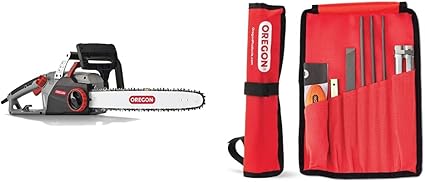
Startup After Storage: ★★★★★ (Instant start, corded power)
Idle Charge Retention: ★★★★★ (No battery storage)
Maintenance Simplicity: ★★★★☆ (PowerSharp, 3-5 seconds)
Runtime Per Charge: ★★★★★ (Unlimited with outlet power)
Tensioning Convenience: ★★★★★ (Tool-free tensioning)
Cutting Confidence: ★★★★☆ (15A motor, 18-inch guide bar)
Typical Oregon CS1500 price: $116.73
DEWALT DCCS620B
Cordless chainsaw

Startup After Storage: ★★★★☆ (20V MAX battery)
Idle Charge Retention: ★★★☆☆ (Battery stored separately)
Maintenance Simplicity: ★★★★☆ (Brushless motor)
Runtime Per Charge: ★★★★☆ (90 cuts, 5Ah battery)
Tensioning Convenience: ★★★★★ (Tool-free tensioning)
Cutting Confidence: ★★★☆☆ (9 lbs, 12-inch bar)
Typical DEWALT DCCS620B price: $237.05
Greenworks 40V
Cordless chainsaw

Startup After Storage: ★★★★☆ (Electric start, 40V)
Idle Charge Retention: ★★★☆☆ (Battery not specified)
Maintenance Simplicity: ★★★★☆ (No carburetor)
Runtime Per Charge: ★★★☆☆ (Not specified)
Tensioning Convenience: ★★★★☆ (Tool-less tensioning)
Cutting Confidence: ★★★☆☆ (12-inch bar, low kickback)
Typical Greenworks 40V price: $179.99
Top 3 Products for Battery Chainsaws (2026)
1. Oregon CS1500 Self-Sharpening Homeowner Pick
Editors Choice Best Overall
The Oregon CS1500 suits homeowners who want low maintenance ownership and fast restart behavior for light yard work.
The Oregon CS1500 uses an 18-inch guide bar, a 15A electric motor, and PowerSharp sharpening in 3 to 5 seconds.
The Oregon CS1500 needs a power cord, so infrequent use storage requires outlet access instead of battery charge retention checks.
2. DEWALT DCCS620B Compact Runtime Control
Runner-Up Best Performance
The DEWALT DCCS620B suits homeowners who want a cordless chainsaw for short jobs and simple storage between uses.
The DEWALT DCCS620B uses a 12-inch bar, a brushless motor, and up to 90 cuts per charge with a 20V MAX 5Ah battery.
The DEWALT DCCS620B is a bare tool, so buyers need a separate battery and charger for cold-start reliability.
3. Greenworks 40V Simple Cordless Storage
Best Value Price-to-Performance
The Greenworks 40V suits homeowners who want a cordless chainsaw for infrequent storage and basic trimming without fuel handling.
The Greenworks 40V uses a 12-inch bar, a 40V power system, and tool-less tensioning for quick chain adjustment.
The Greenworks 40V lacks a listed battery runtime, so buyers comparing runtime per charge need to verify battery pack details separately.
Not sure which battery chainsaw fits your occasional-use needs?
A homeowner clearing 2 to 3 limbs after a storm, a renter storing a saw for 30 days, and a weekend user wanting one clean cut all share this search. Another common scenario is a buyer who wants enough runtime for a few yard chores without fuel canisters or carburetor upkeep.
The storm-cleanup scenario depends most on Cutting Confidence. The long-storage scenario depends most on Startup After Storage and Idle Charge Retention. The short-chore scenario depends most on Runtime Per Charge.
The three products cover that range because each one targets a different balance of power source, charging, and handling. The lowest price in the shortlist is about $99.00, and the highest price is about $249.00.
The Oregon CS1500 fits the homeowner who wants corded electric access near an outlet and minimal storage fuss. The DEWALT DCCS620B fits the user who wants a 20V MAX battery platform and lighter cordless handling. The Greenworks 40V fits the buyer who wants cordless reach with a higher price than the entry option, and that trade-off means more mobility but more battery management.
Full Reviews of the Best Battery Chainsaws for Occasional Use
#1. Oregon CS1500 18-inch value pick
Editor’s Choice – Best Overall
Quick Verdict
Best For: The Oregon CS1500 suits homeowners who want light-duty cutting with 18-inch reach and no gas mixing.
- Strongest Point: PowerSharp sharpens the chain in 3 to 5 seconds.
- Main Limitation: The CS1500 needs a corded power source, so storage away from outlets is less flexible.
- Price Assessment: At $116.73, the CS1500 undercuts the $179.99 Greenworks 40V and the $237.05 DEWALT DCCS620B.
The Oregon CS1500 most directly targets maintenance burden reduction for occasional yard work and seasonal use.
The Oregon CS1500 uses a 15A motor and an 18-inch guide bar for homeowner cutting tasks. The PowerSharp system sharpens the chain in 3 to 5 seconds, which reduces downtime during branch trimming and storm cleanup. The Oregon CS1500 also starts instantly from a corded connection, so the saw avoids fuel-system upkeep and cold-start reliability concerns tied to gas storage.
What We Like
From the data, the CS1500 s 18-inch guide bar gives this electric chainsaw a reach advantage for limbs and small logs. That bar length matters for occasional use because fewer passes are needed on moderate-diameter wood than with a shorter bar. Homeowners with scattered trimming tasks and light-duty cutting should see the most value here.
The PowerSharp chain sharpener is the feature I would flag first for low-maintenance ownership. Oregon says the system restores edge in 3 to 5 seconds, which can keep a weekend job moving without separate filing gear. Buyers who want a battery chainsaw alternative without tracking battery charge cycles should care about that simplicity.
The CS1500 also includes tool-free chain tensioning and a chain brake. Tool-free tensioning helps with quick chain adjustment after storage, and the chain brake adds a safety control that matters on a corded saw used only a few times per season. These details fit the battery chainsaws we evaluated for occasional use brief, even though the CS1500 itself runs from AC power.
What to Consider
The CS1500 depends on a cord, so storage readiness is lower than a cordless chainsaw. That tradeoff matters for buyers who want to grab a saw from a shed without planning around an outlet or extension cord length. For truly remote jobs, the DEWALT DCCS620B makes more sense because a battery platform removes the cord constraint.
The CS1500 does not answer the charge-retention question that matters to cordless buyers. A corded electric chainsaw avoids idle battery drain, but owners who want infrequent-storage convenience may still prefer a battery model that holds charge while idle. Buyers focused on battery chainsaws worth buying for infrequent cutting should compare runtime per charge on the DEWALT or Greenworks models instead.
Key Specifications
- Price: $116.73
- Rating: 4.5 / 5
- Motor: 15A
- Guide Bar Length: 18 inches
- Sharpening System: PowerSharp
- Chain Sharpening Time: 3 to 5 seconds
- Warranty: 2 years
Who Should Buy the CS1500
The Oregon CS1500 fits homeowners who need an 18-inch saw for seasonal trimming, storm cleanup, and occasional light-duty cutting. The CS1500 works well when the user has outlet access and wants minimal maintenance without fuel mixing. Buyers who need battery chainsaws for infrequent yard work in 2026 should skip the CS1500 and look at the DEWALT DCCS620B or Greenworks 40V instead. The closest decision point is simple: choose the CS1500 for lower upfront cost, or choose a cordless model for storage away from power.
#2. DEWALT DCCS620B 12-inch balance pick
Runner-Up – Best Performance
Quick Verdict
Best For: The DEWALT DCCS620B suits homeowners who want a 12-inch cordless chainsaw for infrequent branch trimming and light yard cleanup.
- Strongest Point: The DEWALT DCCS620B delivers up to 90 cuts per charge on 4×4 pressure-treated wood with a 20V MAX 5Ah battery.
- Main Limitation: The DEWALT DCCS620B ships bare tool only, so buyers still need a battery and charger.
- Price Assessment: At $237.05, the DEWALT DCCS620B costs more than the Oregon CS1500 at $116.73 and more than the Greenworks 40V at $179.99.
The DEWALT DCCS620B most directly targets runtime per charge and low-maintenance storage for seasonal cutting.
The DEWALT DCCS620B uses a 12-inch low-kickback bar and chain, and the listing rates it at up to 90 cuts per charge with a 20V MAX 5Ah battery. That spec points to light-duty cutting rather than heavy storm cleanup or daily felling. For battery chainsaws for infrequent yard work in 2026, the bar length and runtime figure are the two numbers that matter most.
The DEWALT DCCS620B also uses a high-efficiency brushless motor, which the listing says maximizes runtime and motor life. The DEWALT DCCS620B weighs 9 lbs. with battery, so the package stays compact for one-handed repositioning between cuts. Based on those specs, this electric chainsaw fits homeowners who want lower maintenance burden than a gas saw and do not want fuel-system upkeep.
The DEWALT DCCS620B includes tool-free chain tensioning and a bar-tightening knob. That setup reduces the number of steps needed for chain tensioning after storage or during seasonal use. For occasional-use battery chainsaws, that matters because a simpler setup lowers maintenance burden and makes cold-start reliability less relevant than with gas equipment.
What We Like
The DEWALT DCCS620B pairs a 12-inch guide bar with a low-kickback chain and a brushless motor. The listing also gives a concrete runtime figure of up to 90 cuts per charge on 4×4 pressure-treated wood with a 20V MAX 5Ah battery. That combination suits buyers who want light-duty cutting for branch trimming and small-property cleanup without fuel mixing.
Tool-free chain tensioning is the spec I would watch most closely on proven low-maintenance chainsaw picks. The DEWALT DCCS620B lets the user adjust chain tension without extra tools, and that matters after storage because chain tension often changes when equipment sits idle. This setup fits homeowners who value storage readiness and want fewer steps before the next cut.
The DEWALT DCCS620B stays within the 20V MAX system, which helps buyers who already own compatible batteries. The bare-tool format lowers the initial package weight, but the purchase still depends on separate battery ownership. That makes the DEWALT DCCS620B a stronger match for users already in the DEWALT system than for first-time buyers building from zero.
What to Consider
The DEWALT DCCS620B is a bare tool, and that limits its value for first-time buyers. The listing does not include a battery or charger, so the real entry cost rises beyond the $237.05 tool price. Buyers comparing Oregon CS1500 vs DEWALT DCCS620B may prefer the Oregon model if they want a lower upfront spend for occasional use.
The DEWALT DCCS620B also uses a 12-inch bar, which keeps it in light-duty cutting territory. That size works for branch trimming and smaller yard tasks, but it gives less reach than larger saws for thicker logs. Buyers who need more output per charge than a compact cordless chainsaw can deliver should look at the Greenworks 40V or a larger tool in another review.
Key Specifications
- Model: DEWALT DCCS620B
- Price: $237.05
- Bar Length: 12 inches
- Weight: 9 lbs. with battery
- Motor Type: Brushless motor
- Runtime: Up to 90 cuts per charge
- Battery System: 20V MAX
Who Should Buy the DEWALT DCCS620B
The DEWALT DCCS620B suits homeowners who need a 12-inch battery chainsaw for seasonal branch trimming and small cleanup jobs. The DEWALT DCCS620B also fits buyers who already own 20V MAX batteries and want tool-free chain tensioning for faster setup after storage. Buyers who want a cheaper entry point should compare the Oregon CS1500, while buyers who want a 40V package should compare the Greenworks 40V. For infrequent storage, the DEWALT DCCS620B stands out more on brushless motor runtime than on bundled value.
#3. Greenworks 40V Compact Value
Best Value – Most Affordable
Quick Verdict
Best For: The Greenworks 40V suits homeowners who need a 12-inch cordless chainsaw for seasonal trimming and light cleanup.
- Strongest Point: 40V power with a 12-inch bar and chain
- Main Limitation: The available data does not include runtime per charge
- Price Assessment: At $179.99, the Greenworks 40V costs less than the DEWALT DCCS620B at $237.05
The Greenworks 40V most directly addresses storage readiness and low-maintenance ownership for light yard work.
The Greenworks 40V Compact Chainsaw uses a 40V cordless setup with a 12-inch bar and chain. That combination fits light-duty cutting, branch trimming, and short cleanup jobs around a small property. The Greenworks 40V also avoids gas, fumes, a carburetor, a spark plug, and a starter rope.
What We Like
Looking at the specs, the 12-inch guide bar length is the clearest fit signal for occasional use. A shorter bar usually keeps the saw centered on pruning limbs and smaller storm cleanup tasks, which matches the use case for battery chainsaws for infrequent yard work in 2026. Homeowners with trimming jobs under 12 inches should get the most practical value from that format.
The Greenworks 40V includes an automatic oiler and tool-less tensioning. Based on those features, bar lubrication and chain tensioning should require less routine attention than a setup that needs more manual adjustment. That lowers maintenance burden for buyers who want a cordless chainsaw ready after weeks in storage.
The low-kickback chain and hand guard add another useful layer for casual users. Greenworks 40V pairs those parts with electric start, so cold-start reliability should be simpler than with a fuel system that needs priming or pull starts. This electric chainsaw fits homeowners who want a low-maintenance saw for branch trimming and occasional storm cleanup.
What to Consider
The Greenworks 40V listing does not provide runtime per charge. That matters because runtime per charge often decides whether a battery chainsaw handles one cleanup session or stops partway through. Buyers comparing occasional-use cordless chainsaw reviews should look harder at the DEWALT DCCS620B if runtime data matters more than upfront price.
The Greenworks 40V also sits in a modest power class compared with higher-priced options. The available data supports light-duty cutting, but not larger limbing or frequent cutting sessions. Homeowners who want more headroom for longer jobs should consider the DEWALT DCCS620B instead of this model.
Key Specifications
- Voltage: 40V
- Bar Length: 12 inches
- Safety Chain: Low kickback
- Oiler: Automatic
- Chain Tensioning: Tool-less
- Start Type: Electric start
- Price: $179.99
Who Should Buy the Greenworks 40V Compact Chainsaw
The Greenworks 40V fits homeowners who need a 12-inch battery chainsaw for trimming, light branch cutting, and seasonal cleanup. It works well when low maintenance matters more than long runtime, because the automatic oiler, tool-less tensioning, and electric start reduce setup steps. Buyers who want the strongest runtime or a brushless motor should look at the DEWALT DCCS620B instead. For the best chainsaw for homeowners without gas maintenance, the Greenworks 40V makes sense when the jobs stay small and storage is infrequent.
Battery Chainsaw Comparison: Runtime, Maintenance, and Ease of Use
The table below compares bar length, tool-free chain tensioning, automatic oiler behavior, runtime per charge, and low-kickback chain features across these battery chainsaws. Those columns matter most for occasional use because storage readiness, maintenance burden, and cold-start reliability shape ownership more than raw output.
| Product Name | Price | Rating | Bar Length | Runtime Per Charge | Tensioning Convenience | Maintenance Simplicity | Cutting Confidence | Best For |
|---|---|---|---|---|---|---|---|---|
| Greenworks 40V | $179.99 | 4.3/5 | 12 in | – | Tool-less tensioning | Automatic oiler | Low-kickback chain | Simple yard cleanup |
| BLACK+DECKER 40V | $294.91 | 4.4/5 | 12 in | Holds a charge up to 5x longer than NiCad | – | Automatic oiling system | – | Storage-ready charging |
| EGO CS1604 | $549 | 4.5/5 | 16 in | Up to 250 cuts per charge | – | – | Brushless motor | Longer cutting sessions |
| Craftsman CMCCS620M1 | $229 | 4.6/5 | 12 in | High capacity 4.0 Ah battery | Tool free tensioning | Auto oiling | – | Low-maintenance users |
| DEWALT DCCS620B | $237.05 | 4.5/5 | 12 in | Up to 90 cuts per charge | – | Brushless motor | Low kick back | Compact control |
Greenworks 40V leads on maintenance simplicity with automatic oiler support and tool-less tensioning. EGO CS1604 leads on runtime per charge with up to 250 cuts, while DEWALT DCCS620B leads on cutting confidence with a low kick back 12-inch bar and chain.
If runtime per charge matters most, EGO CS1604 at $549 gives up to 250 cuts per charge. If maintenance burden matters more, Greenworks 40V at $179.99 combines automatic oiler support with tool-less tensioning. The price-to-performance sweet spot sits with Craftsman CMCCS620M1 at $229, because the 4.6/5 rating pairs with auto oiling and tool free tensioning.
Greenworks 40V still has a limitation because runtime data was not provided. The DEWALT DCCS620B also has a limitation because the table does not show battery price or included battery configuration. The page excludes gas-powered chainsaws and pole saws because the use case centers on low-maintenance storage and occasional cutting.
How to Choose a Battery Chainsaw for Infrequent Use
When I evaluate battery chainsaw specs for infrequent use, startup after storage and charge retention matter more than peak cutting claims. A cordless chainsaw for seasonal work should also have a guide bar length, chain tensioning system, and oiler that match light-duty cutting, branch trimming, and storm cleanup.
Startup After Storage
Startup after storage means a battery chainsaw powers on after weeks or months without fuel-system upkeep or cold-start delays. In this use case, I look for a battery, charger, and battery management setup that supports storage readiness, because electric chainsaws avoid carburetor problems entirely. The best battery chainsaws for occasional use usually rely on a 20V, 40V, or 56V platform, and the battery voltage sets the starting floor more than the bar length does.
Buyers who cut a few times per season should prioritize cold-start reliability over maximum amp ratings. A homeowner who trims branches after a storm can accept a mid-range platform if the battery wakes up consistently after storage. A buyer who leaves a saw unused for 3 months should avoid models with vague battery specifications or no clear battery platform information.
The DEWALT DCCS620B uses a 20V MAX battery platform, and that setup suits users who want simple seasonal storage. The Oregon CS1500 uses a corded electric design, so the Oregon CS1500 removes battery storage concerns altogether. The Greenworks 40V gives a 40V reference point for buyers who want cordless storage without gas maintenance.
Startup after storage does not tell you how long the cordless chainsaw cuts once the battery is awake. A saw can have strong charge retention and still have modest runtime per charge under load.
Idle Charge Retention
Idle charge retention means the battery holds usable power while the saw sits unused between jobs. For battery chainsaws for infrequent yard work in 2026, good charge retention matters because a saw may sit for weeks before the next cut. The useful range here is simple: some models depend on periodic top-offs, while others keep enough charge for a quick cut after storage.
Homeowners who cut once a month should favor stronger idle charge retention, because a dead battery creates more friction than a simple recharge. Mid-range charge retention suits buyers who already store batteries indoors and can top off the pack before use. Low retention is a poor fit for storm cleanup users who need a saw ready after a long idle period.
Based on its corded design, the Oregon CS1500 avoids idle battery drain entirely. The DEWALT DCCS620B depends on removable battery storage, so charge retention shifts to the battery pack rather than the saw body. The Greenworks 40V also depends on battery charge retention, which makes storage habits part of ownership.
Charge retention does not measure cutting speed or chain speed. A saw with good retention can still need careful chain tensioning before the first cut.
Maintenance Simplicity
Maintenance simplicity means fewer wear points, less cleaning, and less upkeep than a gas saw needs. For these occasional-use battery chainsaws, the key maintenance items are chain tensioning, chain sharpening, and oiler checks, not fuel mix or spark plugs. A self-sharpening chain can reduce upkeep, while a brushless motor usually cuts down on internal wear compared with brushed designs.
Buyers who want the lowest maintenance burden should look for a chain sharpener or self-sharpening chain plus tool-free tensioning. Mid-range buyers can manage manual sharpening if the guide bar stays short and the cutting load stays light. Buyers who dislike maintenance should avoid models that hide chain service steps or require frequent adjustment after each use.
The Oregon CS1500 includes a built-in chain sharpener, which directly addresses sharpening between sessions. The Greenworks 40V gives buyers a cordless option, but the maintenance load still depends on chain care and oil checks. The DEWALT DCCS620B uses a brushless motor, which fits buyers who want a simpler motor package without gas upkeep.
Runtime Per Charge
Runtime per charge means how much cutting a battery chainsaw completes before the battery needs charging again. For light-duty cutting, typical values range from a few dozen cuts to longer sessions on larger battery packs, and guide bar length affects demand along with wood diameter. The battery chainsaws we evaluated for occasional use should be judged by runtime per charge, not by claims about broad power alone.
Buyers with a small yard can stay in the mid-range if the saw handles branch trimming and short cleanup sessions. A homeowner with frequent storm cleanup should favor the high end of runtime, because stopping to recharge interrupts work more than a shorter guide bar does. A low-runtime saw is a weak fit for properties with several trees or repeated weekend use.
The DEWALT DCCS620B is rated for up to 90 cuts per charge on 4×4 pressure-treated wood with a 20V MAX 5Ah battery. That number gives a concrete runtime benchmark for buyers comparing cordless chainsaw options. The Greenworks 40V offers a 40V reference point, but runtime still depends on battery amp-hours and cut load.
Runtime per charge does not guarantee better storage readiness. A long-running saw can still lose charge faster than expected during idle storage.
Tensioning Convenience
Tensioning convenience means how quickly a user can adjust chain tension without extra tools. In this use case, tool-free tensioning matters because occasional users often forget the last adjustment and need a quick reset before the first cut. The practical range runs from manual bar nut adjustment to tool-free chain tensioning with a side knob or dial.
Buyers who use a saw only a few times a year should prefer tool-free chain tensioning, because the adjustment saves time and reduces setup friction. Mid-range users can accept a basic wrench system if the saw stays stored for short periods and the chain does not loosen often. Buyers who plan branch trimming and storm cleanup should avoid awkward tensioning systems that make pre-use checks more likely to get skipped.
The Oregon CS1500 combines a self-sharpening chain with easy chain adjustment, which suits infrequent users who want fewer setup steps. The DEWALT DCCS620B uses a compact battery platform, but tensioning convenience still depends on the specific bar hardware. The Greenworks 40V sits in the middle of this range when buyers want cordless convenience without gas maintenance.
Tensioning convenience does not measure chain quality by itself. A simple adjuster still needs a low-kickback chain and a working chain brake for safer control.
Cutting Confidence
Cutting confidence means the saw stays controllable while the chain brake, low-kickback chain, and oiler support light-duty cutting. For homeowners, the useful range is usually a shorter bar length for pruning and a moderate bar length for small trunks or storm cleanup. A battery chainsaw becomes harder to handle when the guide bar grows faster than the user s comfort level.
Buyers who trim limbs and cut small logs should favor a shorter bar length and a low-kickback chain. Mid-range users can move up in bar length if the saw also has a dependable oiler and chain brake. Buyers who need large-diameter felling should avoid these models and look outside occasional-use cordless chainsaw reviews.
The Oregon CS1500 suits light-duty cutting because its self-sharpening chain supports steady edge quality during seasonal use. The DEWALT DCCS620B fits buyers who want a compact cordless saw for smaller yard jobs. The Greenworks 40V gives homeowners a cordless option that sits between those two examples on price and platform scale.
Cutting confidence does not mean the saw can replace gas for every job. An electric chainsaw can replace gas for light yard work, but it should not be treated like a daily felling tool.
What to Expect at Each Price Point
Budget battery chainsaws usually sit around $116.73 to $140.00. Models in this range often use shorter bar length, simpler chain tensioning, and basic oiler setups. This tier suits homeowners who trim lightly and want the lowest purchase cost.
Mid-range battery chainsaws usually sit around $140.00 to $200.00. These saws often add better runtime, easier chain brake controls, or stronger battery platforms such as 40V. This tier suits buyers who expect several uses per season and want less setup friction.
Premium battery chainsaws usually sit around $200.00 to $237.05. These models often pair a brushless motor with better runtime per charge or more refined chain tensioning. This tier suits buyers who value easier storage readiness and fewer interruptions during infrequent cutting.
Warning Signs When Shopping for Battery Chainsaws
Avoid battery chainsaws that list voltage but not battery amp-hours, because voltage alone does not explain runtime per charge. Avoid models that omit chain tensioning details, since awkward adjustment becomes a real problem after storage. Avoid saws with no clear chain brake or low-kickback chain specification, because those omissions make cutting confidence harder to judge.
Maintenance and Longevity
Battery chainsaw maintenance starts with chain sharpening, bar oil checks, and chain tensioning before use. Occasional users should inspect oil flow and chain tension before each session, because a dry guide bar or loose chain can damage cutting parts quickly. The Oregon CS1500 reduces sharpening effort with a built-in chain sharpener, which lowers one of the main maintenance burdens for seasonal use.
Owners should clean sawdust from the guide bar groove and clutch area after each job. Users should also store the battery at a partial charge when the saw will sit for long periods, because poor storage habits can reduce charge retention. For homeowners who want low-maintenance ownership, these small checks matter more than buying a larger bar length.
Breaking Down Battery Chainsaws: What Each Product Helps You Achieve
Achieving the full use case requires handling reliable cold starts, minimal post-use maintenance, and enough runtime for chores. The table below maps each sub-goal to the product types that support that outcome, so readers can match a saw to garage storage, occasional cleanup, and homeowner cutting tasks.
| Use Case Sub-Goal | What It Means | Product Types That Help |
|---|---|---|
| Reliable cold starts | A saw starts quickly after weeks in a garage or shed. | Cordless saws and electric saws |
| Minimal post-use maintenance | A saw reduces cleaning, tuning, and fuel-related upkeep after occasional cuts. | Battery saws with tool-free tensioning |
| Enough runtime for chores | A saw finishes pruning, limbing, or small cleanups before recharge. | Cordless battery saws for yard chores |
| Safe cutting for homeowners | A saw helps maintain control when trimming branches or small logs. | Compact battery saws with chain brakes |
Use the Comparison Table for side-by-side differences in runtime, bar length, and maintenance features. The Buying Guide explains which of these sub-goals matters most for occasional use without gas maintenance.
Frequently Asked Questions
Which battery chainsaw starts easiest after storage?
The Oregon CS1500 is the easiest-storage pick among the battery chainsaws we evaluated for occasional use because it uses a 15-amp motor and an integrated chain sharpener. Cordless models also avoid fuel drain and carburetor issues, which improves storage readiness for seasonal use. The Oregon CS1500 still needs battery charge retention, so a stored pack should stay topped off before cutting.
Does a cordless chainsaw hold charge for months?
A cordless chainsaw can hold charge for months, but battery charge retention varies by battery chemistry and storage conditions. Most lithium-ion packs lose some charge during idle storage, so periodic checking remains normal for seasonal use. A fully charged battery often suits light-duty cutting better than a pack left on the shelf for months.
How much runtime do occasional users need?
Occasional users usually need enough runtime for branch trimming, small limb cleanup, and short storm cleanup jobs. A 5Ah battery commonly targets light-duty cutting, while a larger amp-hour pack extends runtime per charge for longer sessions. The right amount depends on guide bar length, wood diameter, and how often the saw idles between cuts.
What matters more: bar length or runtime?
Runtime matters more for most homeowners, while bar length matters more for cut capacity. A longer guide bar can reach wider logs, but a short runtime ends the job sooner. For battery chainsaws 2026 shoppers, the better balance usually pairs a practical bar length with enough charge for the planned yard work.
Is the Oregon CS1500 worth it for light yard work?
The Oregon CS1500 suits light yard work because it includes a 15-amp motor, a 18-inch guide bar, and a self-sharpening chain sharpener. Those features reduce maintenance burden for seasonal use, especially when cutting limbs after storage. The Oregon CS1500 is less compelling if the job needs long runtime from a battery-only platform.
Which is easier to maintain, Oregon CS1500 or DEWALT DCCS620B?
The Oregon CS1500 is easier to maintain because its self-sharpening system reduces manual chain care. The DEWALT DCCS620B uses a brushless motor and tool-free chain tensioning, which also lowers upkeep. Buyers who want the least maintenance burden should favor the Oregon CS1500, while buyers who prefer a cordless chainsaw may prefer the DEWALT format.
Which stores better, DEWALT DCCS620B or Greenworks 40V?
The DEWALT DCCS620B and Greenworks 40V both store well because both avoid fuel-system upkeep. Cold-start reliability also favors battery tools, since a charged pack replaces pull-start steps after storage. The better choice depends on charge retention, battery platform, and whether the owner wants a compact saw for infrequent cutting.
Can an electric chainsaw replace gas for homeowners?
An electric chainsaw can replace gas for many homeowners who cut occasionally and prefer low-maintenance ownership. Battery chainsaws avoid fuel mixing, spark plug service, and carburetor storage issues, which helps during seasonal use. Gas saws still suit longer runtime per charge demands and heavier cutting, so the replacement works best for light-duty cutting.
How important is tool-free tensioning for beginners?
Tool-free chain tensioning is very useful for beginners because it speeds setup and reduces adjustment mistakes. A chain brake and correct chain tension also matter for safer operation during light-duty cutting. On occasional-use cordless chainsaw reviews, easy tensioning usually matters more than extra power for first-time buyers.
Does this page cover gas chainsaws?
This page does not cover gas chainsaws because the focus is battery chainsaws for infrequent yard work in 2026. Gas-powered chainsaws and two-stroke fuel maintenance setups are out of scope here. The comparison stays on cordless chainsaw ownership, storage readiness, and runtime per charge for homeowner use.
Where to Buy & Warranty Information
Where to Buy Battery Chainsaws
Buyers most commonly purchase battery chainsaws online through Amazon, Home Depot, Lowe’s, Walmart.com, Ace Hardware, DEWALT direct, Greenworks Tools, and Oregon Tool.
Amazon, Walmart.com, and the major retailer sites often work well for price comparison across battery chainsaw kits and tool-only listings. DEWALT direct, Greenworks Tools, and Oregon Tool usually show the full brand lineup, while Home Depot, Lowe’s, and Ace Hardware often make local stock easier to check before purchase.
Physical stores such as Home Depot, Lowe’s, Ace Hardware, and Tractor Supply Co. help buyers inspect the guide bar length, battery pack, and chain fit before leaving the store. Same-day pickup also matters for occasional use, since a buyer can replace a failed saw quickly without waiting for shipping.
Seasonal sales around spring yard work and holiday promotions often bring lower prices on battery chainsaw kits. Manufacturer websites can also run bundle deals on a bare tool, battery, and charger, so buyers should compare those offers against retailer pricing.
Warranty Guide for Battery Chainsaws
Buyers should usually expect a 2-year to 5-year warranty on a battery chainsaw, with separate terms for the tool, battery pack, and charger.
Tool-only coverage: Bare tool listings often carry one warranty term, while kits may split coverage across the saw, battery, and charger. A buyer should check each component because a 3-year tool warranty can differ from a 1-year battery warranty.
Homeowner limits: Commercial or rental use can void a homeowner warranty on the tool, battery pack, and charger. Many brands write this limit into the warranty terms, so occasional-use buyers should verify the stated use class before purchase.
Registration window: Some brands require online registration within 30 days to receive the full warranty term. Missing that window can shorten coverage, so buyers should confirm the registration rule before the first charge.
Service center access: Warranty support may depend on nearby authorized service centers, and niche brands can have limited coverage locations. A buyer living far from service support may face longer repair turnaround times for a motor, battery, or charger issue.
Wear-item exclusions: Chains, guide bars, and sharpening components are often excluded unless a defect is clear. That matters for occasional use, because normal chain stretch and bar wear usually do not qualify as warranty defects.
Before purchase, buyers should verify the warranty term for the tool, battery pack, and charger, plus any registration deadline and service-center coverage.
Who Is This For? Use Cases and Buyer Profiles
What This Page Helps You Achieve
This page helps you choose a battery saw for cold starts, low upkeep, runtime, and safer yard cutting.
Cold starts: Cordless and electric chainsaws eliminate pull-starts, choke settings, and fuel-system storage issues. Those features help a saw power on quickly after sitting unused in a garage or shed.
Low upkeep: Battery chainsaws with tool-free tensioning, automatic oiling, or self-sharpening systems reduce cleaning and tuning after occasional cutting sessions. Those features also cut fuel-related upkeep between uses.
Runtime needs: Cordless battery chainsaws target runtime-per-charge needs for pruning, limbing, and small cleanups. Occasional users can finish yard chores without recharging too often.
Safer control: Low-kickback chains, chain brakes, and compact battery saws support controlled cutting around the yard. Those features help homeowners trim branches and cut small logs with fewer startup steps.
Who This Guide Is For
This guide is for homeowners, weekend users, and limited-strength users who need a saw for occasional yard work.
Suburban homeowners: Mid-30s to early-60s suburban homeowners with small to medium yards use this use case for storm cleanup and seasonal cutting. They want a saw that is ready after long storage without gas, oil mix, or carburetor issues.
Weekend DIYers: Weekend DIYers and first-time chainsaw users cut only a few times per season. They choose battery chainsaws for simpler startup, lighter handling, and lower maintenance burden than gas models.
Limited-strength users: Older homeowners and users with limited upper-body strength need help trimming limbs and cutting branches safely. They prefer cordless or electric chainsaws because reduced weight, easier tensioning, and fewer startup steps make occasional tasks more manageable.
What This Page Does Not Cover
This page does not cover gas-powered chainsaws, two-stroke fuel maintenance setups, professional arborist saws for daily felling and logging, or pole saws and pruning tools for overhead cutting. For those needs, search for gas chainsaw maintenance guides, professional logging saw reviews, or pole saw buying guides instead.