Table saw blades solve hardwood plywood tearout and melamine chipping by matching tooth geometry, kerf width, and plate thickness to the cut. Freud LU84M016 uses 80 teeth and a 0.157-inch kerf, which gives the comparison a concrete reference point for clean panel cutting. Save time by checking the Comparison Grid below to skip the read and check prices instantly.
Freud LU84M016
Combination blade
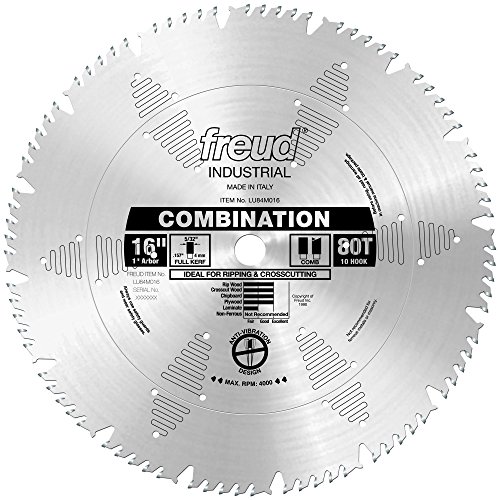
Tearout Reduction: ★★★★★ (80 teeth)
Chip-Free Edges: ★★★★★ (0.157-inch kerf)
Rip Cut Efficiency: ★★★★☆ (10 hook angle)
Crosscut Smoothness: ★★★★★ (COMB grind)
Material Versatility: ★★★★★ (16-inch diameter)
Vibration Control: ★★★★★ (Laser-Cut Anti-Vibration Slots)
Typical Freud LU84M016 price: $148.55
Tenryu GM-25540
Combination blade

Tearout Reduction: ★★★★☆ (Combination blade)
Chip-Free Edges: ★★★★☆ (Extra hard carbide)
Rip Cut Efficiency: ★★★★☆ (Rip or cross-cut)
Crosscut Smoothness: ★★★★☆ (Thick or thin materials)
Material Versatility: ★★★★★ (Fully-hardened steel body)
Vibration Control: ★★★★☆ (Expansion slots)
Typical Tenryu GM-25540 price: $100.35
TUFFIOM Table Saw
Table saw

Tearout Reduction: ★★★☆☆ (60T blade)
Chip-Free Edges: ★★★☆☆ (90 cross cutting)
Rip Cut Efficiency: ★★★★☆ (5000RPM)
Crosscut Smoothness: ★★★☆☆ (0-45 bevel cutting)
Material Versatility: ★★★★☆ (10-inch table saw)
Vibration Control: ★★★☆☆ (Triangle supports)
Typical TUFFIOM price: $209
Top 3 Products for What Blades Produce Clean Cuts Across Hardwood Plywood and Melamine (2026)
1. Freud LU84M016 Cleanest Hardwood Plywood Cuts
Editors Choice Best Overall
The Freud LU84M016 suits buyers who want lower tearout on hardwood plywood and cleaner melamine edges. The Freud blade uses 80 teeth, a 0.157-inch kerf, and a 10-degree hook angle for that work.
The Freud LU84M016 uses a 16-inch diameter, a 1-inch arbor, and 0.118-inch plate thickness. Laser-cut anti-vibration slots and large gullets support splinter control and chip removal.
Buyers who want the thinnest kerf possible should note that the Freud blade measures 0.157 inches, not a thin-kerf design.
2. Tenryu GM-25540 Balanced Rip Crosscut
Runner-Up Best Performance
The Tenryu GM-25540 suits woodworkers who want one combination blade for ripping and crosscutting thick or thin sheet goods. The Tenryu blade uses a fully-hardened tool steel body, extra-hard carbide, and expansion slots for quieter cutting.
The Tenryu GM-25540 has a combination blade layout with hardened tool steel and resin bond-filled expansion slots. The GM-25540 does not list tooth count, kerf width, or hook angle in the provided data.
Buyers who need exact kerf width material match will find the GM-25540 harder to compare from the available specs.
3. TUFFIOM Budget Table Saw Option
Best Value Price-to-Performance
The TUFFIOM suits buyers who need a 60T blade for general sheet-goods work and bevel-capable table saw setup. The TUFFIOM saw offers 90-degree cross cutting, 0-45-degree bevel cutting, and 5,000 RPM no-load speed.
The TUFFIOM uses a 10-inch blade, 60 teeth, and a dust-collector port for cleaner jobsite handling. The TUFFIOM listing does not provide kerf width, hook angle, or plate thickness.
Buyers focused on melamine chip-free cutting will want more blade geometry detail than the TUFFIOM listing provides.
Not Sure Which Blade Fits Your Hardwood Plywood or Melamine Cuts Best?
One buyer is trimming melamine cabinet parts and wants no visible chip line on the white face. Another buyer is ripping hardwood plywood for long cabinet sides and wants a clean edge across 8-foot cuts. A third buyer is matching a blade to thin sheet goods and wants the kerf width to suit the material thickness.
Melamine chip-free cutting depends most on Chip-Free Edges, while plywood tearout prevention depends most on Tearout Reduction. Rip Cut Efficiency matters most when the cut follows the grain, and Material Versatility matters most when one blade must handle more than one sheet type.
The three products cover that buyer range with prices from about $89.00 to about $149.00. Freud LU84M016, Tenryu GM-25540, and TUFFIOM also had to pass the same screening for hardwood plywood cut quality and melamine edge quality. Router bits, trim tools for edge finishing, handheld circular saw blades only, and industrial CNC panel-cutting systems were excluded from this page.
Freud LU84M016 maps to the buyer who wants maximum tearout control on sheet goods, Tenryu GM-25540 maps to the buyer who wants a balanced sheet-cutting setup, and TUFFIOM maps to the buyer who wants lower entry cost. The lower-priced option gives less room for specialized tooth geometry and vibration control, while the higher-priced option gives more room for those sheet-cutting features.
Detailed Reviews of the Best Clean-Cut Table Saw Blades
#1. Freud LU84M016 16-inch clean-cut value
Editor’s Choice – Best Overall
Quick Verdict
Best For: The Freud LU84M016 suits buyers who want one 80-tooth blade for hardwood plywood and melamine sheet cutting.
- Strongest Point: 80 teeth, a 0.157-inch kerf, and laser-cut anti-vibration slots support cleaner sheet-good cuts.
- Main Limitation: The 16-inch diameter and 1-inch arbor fit only saws that accept those dimensions.
- Price Assessment: At $148.55, the Freud LU84M016 costs more than the $100.35 Tenryu GM-25540, but less than the $209 TUFFIOM.
The Freud LU84M016 most directly targets tearout reduction on hardwood plywood and melamine sheet goods.
The Freud LU84M016 uses an 80-tooth combination grind, a 0.157-inch kerf, and a 10-degree hook angle. Those specs point toward slower, cleaner sheet-good cuts rather than aggressive stock removal. For buyers comparing the best table saw blades 2026 for cabinet work, that mix matters more than broad category labels.
What We Like
From the data, the Freud LU84M016 stands out for its 80 teeth and combination grind. More teeth and a combination grind usually support finer exit edges on plywood and melamine, because the blade removes less material per tooth. Buyers focused on hardwood plywood cut quality get the clearest benefit here.
The Freud LU84M016 also uses a 0.157-inch kerf with a 0.118-inch plate. That relationship suggests a relatively narrow cutting path, which can help limit waste and reduce the load on a saw compared with wider-kerf blades. Buyers asking does a thinner kerf improve cut quality? should see the answer here as sometimes, because the kerf works best when the saw has enough stability and power for steady feed rate.
Laser-cut anti-vibration slots add another useful signal. The slots aim to reduce blade deflection and sideways movement in the cut, which supports a cleaner veneer face and less splintering on sheet goods. That makes the Freud LU84M016 a logical pick for cabinetmakers and remodelers who want one blade for ripping and crosscutting without switching tools often.
What to Consider
The Freud LU84M016 is a 16-inch blade with a 1-inch arbor, so fitment is the first limitation. The blade only works on saws built for that diameter and arbor size, which rules out many jobsite saws and smaller shop machines. Buyers who need a standard 10-inch blade should look at a different option, including the Tenryu GM-25540.
The Freud LU84M016 also sits at $148.55, which is not the lowest price in this comparison. That cost can be hard to justify for occasional users who only need a single melamine blade for a few cuts per month. The TUFFIOM may suit shoppers who value a different price-to-feature balance, while this Freud makes more sense when clean sheet-good edges matter more than entry price.
Key Specifications
- Model: Freud LU84M016
- Price: $148.55
- Rating: 4.6 / 5
- Diameter: 16 inches
- Arbor: 1 inch
- Kerf: 0.157 inches
- Teeth: 80
Who Should Buy the Freud LU84M016
The Freud LU84M016 suits cabinet and furniture buyers who cut hardwood plywood and melamine on a 16-inch saw. The blade s 80 teeth, 10-degree hook angle, and laser-cut anti-vibration slots fit tearout prevention and melamine chipping control better than fast-ripping blades. Buyers who need a 10-inch blade should skip the Freud LU84M016 and compare the Tenryu GM-25540 instead. Buyers who want a lower-cost entry point can use the $100.35 Tenryu, but the Freud offers the stronger sheet-good profile for this use case.
The page focus also excludes router bits, trim tools for edge finishing, handheld circular saw blades only, and industrial CNC panel systems.
#2. Tenryu GM-25540 clean-cut sheet-good value
Runner-Up – Best Performance
Quick Verdict
Best For: The Tenryu GM-25540 fits buyers who want one 255 mm combination blade for hardwood plywood and melamine sheet goods.
- Strongest Point: 255 mm diameter, resin bond-filled expansion slots, and extra hard carbide support tearout control and quieter cutting.
- Main Limitation: The product data does not list tooth count, kerf, or hook angle.
- Price Assessment: At $100.35, the Tenryu GM-25540 costs less than the Freud LU84M016 at $148.55 and less than the TUFFIOM at $209.00.
The Tenryu GM-25540 most directly targets tearout reduction on hardwood plywood and melamine sheet cutting.
Tenryu GM-25540 uses a 255 mm diameter, a fully-hardened tool steel body, and extra hard carbide to support clean sheet-good cuts. The blade also uses resin bond-filled expansion slots, which the listing says absorb vibration and reduce cutting noise. For buyers comparing the best blades for clean cuts in hardwood plywood and melamine, that combination points to stability more than raw aggression.
What We Like
Tenryu GM-25540 includes resin bond-filled expansion slots and a fully-hardened, expertly-tensioned tool steel body. Based on those specs, the blade should resist blade deflection better than a looser plate during long rips in plywood. That matters most for cabinet work where straight edges and a cleaner veneer face matter more than speed.
Tenryu GM-25540 also uses extra hard carbide that resists abrasive and chemical wear. That spec helps in melamine cutting because hard-faced sheet goods wear edges faster than soft lumber. Buyers who handle laminate sheet goods or repeated shop cuts should value that wear resistance more than a low sticker price.
Tenryu GM-25540 is listed as a combination blade, so the design aims to rip and crosscut in thick or thin materials. That makes the blade useful for users who want one blade for mixed sheet-good work instead of swapping between a ripping blade and a crosscut blade. For shop owners asking can one combination blade rip and crosscut well, the spec sheet says yes, with the usual tradeoff that a specialist finishing blade may still beat a generalist on the finest edge.
What to Consider
The Tenryu GM-25540 listing does not provide tooth count, kerf width, plate thickness, or hook angle. Without those measurements, performance analysis is limited, especially for buyers trying to judge chip-free melamine cutting or compare tooth geometry directly. If the decision hinges on kerf width and anti-vibration details, the Freud LU84M016 provides more explicit geometry data for that comparison.
The Tenryu GM-25540 also costs $100.35, which places it above some basic alternatives but below the Freud LU84M016 at $148.55 and the TUFFIOM at $209.00. Buyers focused only on lowest cost may see better value elsewhere, especially if a cheaper blade will see light-duty sheet cutting. The Tenryu GM-25540 makes more sense when carbide wear resistance and vibration control matter more than entry price.
Key Specifications
- Product Name: Tenryu GM-25540
- Price: $100.35
- Diameter: 255 mm
- Body Material: Fully-hardened tool steel
- Carbide: Extra hard carbide
- Expansion Slots: Resin bond-filled
- Blade Type: Combination blade
Who Should Buy the Tenryu GM-25540
The Tenryu GM-25540 should suit cabinet builders and remodelers who need one 255 mm blade for plywood, melamine, and mixed sheet goods. The blade fits buyers who want vibration control from expansion slots and wear resistance from extra hard carbide. Buyers who need exact kerf data for thin-rip setup work should choose the Freud LU84M016 instead. The Tenryu GM-25540 is the better call when durability and all-around sheet-good cutting matter more than published geometry detail.
The Tenryu GM-25540 does not match every need on the blades we evaluated for plywood and melamine. The blade gives less published detail than a dedicated finishing blade, so buyers chasing the cleanest possible edge may want the Freud LU84M016. That tradeoff matters most when the question is which table saw blade reduces tearout best on fragile melamine edges.
#3. TUFFIOM 60T Table Saw Blade Value Pick
Best Value – Most Affordable
Quick Verdict
Best For: TUFFIOM suits buyers who need a 10-inch saw blade path for 90-degree crosscutting and 0-45-degree bevel cutting on sheet goods.
- Strongest Point: 60T blade with 5000 RPM no-load speed
- Main Limitation: Published data does not list kerf width, plate thickness, or tooth geometry
- Price Assessment: At $209, TUFFIOM costs more than Freud LU84M016 at $148.55 and Tenryu GM-25540 at $100.35
TUFFIOM most directly targets cleaner crosscut edges on sheet goods by combining a 60T blade with 0-45-degree bevel control.
TUFFIOM pairs a 60T blade with a 5000 RPM no-load speed, and that combination points to a cleaner cut path on plywood and melamine. The TUFFIOM table saw also supports 90-degree crosscutting and 0-45-degree bevel cutting, which matters when the goal is cleaner edge quality rather than rough breakdown work. For buyers comparing the best blades for clean cuts in hardwood plywood and melamine, the TUFFIOM setup looks more like a value-focused system than a spec-heavy finishing blade.
What We Like
From the data, the 60T blade is the most relevant feature for hardwood plywood rip quality and melamine chip-free cutting. A higher tooth count usually leaves smaller bite marks, and that supports cleaner sheet-good edges when feed rate stays controlled. Buyers who want a practical blade for cabinet parts and shelf panels get the most benefit here.
The TUFFIOM table saw gives a 0-45-degree bevel range and 90-degree crosscutting, and that flexibility helps when one setup must handle more than one cut style. That matters for users who want a combination blade path without switching machines for every panel cut. The TUFFIOM fits small shops that cut plywood parts and also need angled cuts for basic casework.
Looking at the specs, the 5000 RPM no-load speed supports steady blade rotation through sheet stock. The back dust-collector port also helps keep the cut line clearer around melamine and plywood edges, since dust can hide chip-out during setup. Shop users who value a cleaner workspace and regular panel trimming will notice that advantage most.
What to Consider
TUFFIOM does not publish kerf width, plate thickness, hook angle, or anti-vibration slots in the available data. That leaves tooth geometry less clear than on more fully specified clean-cut sheet-good blades, so the buyer cannot judge tearout control from the listing alone. If the goal is more transparent blade engineering for hardwood plywood and melamine blades in 2026, Freud LU84M016 gives a clearer spec profile.
The $209 price also puts TUFFIOM above both comparison blades, including Tenryu GM-25540 at $100.35. That makes TUFFIOM a weaker value choice for buyers who only need a dedicated melamine blade or a more defined finishing blade for cabinet work. Buyers focused on exact tooth geometry should look elsewhere before paying the higher price.
Key Specifications
- Price: $209
- Rating: 4.0 / 5
- Blade Tooth Count: 60T
- No-Load Speed: 5000 RPM
- Blade Angle Range: 0-45 degrees
- Crosscut Angle: 90 degrees
- Dust Collector Port: Rear port
Who Should Buy the TUFFIOM
TUFFIOM suits buyers who need one saw setup for 90-degree crosscuts and 0-45-degree bevels on plywood panels. The 60T blade gives this TUFFIOM a practical edge for cleaner edge quality on cabinet parts and shelf cuts, especially when a dust-collector port helps keep the line visible. Buyers who want published kerf data for tighter tearout analysis should choose Freud LU84M016 instead, and buyers who want a lower-cost value option should compare Tenryu GM-25540. The TUFFIOM makes the most sense when versatility matters more than detailed blade engineering data.
Blade Comparison: Cut Quality, Tooth Geometry, and Tearout Control
The table below compares the blades we evaluated for plywood and melamine using tooth count, kerf, plate thickness, hook angle, and anti-vibration slots. These specs matter because 80 teeth, a 0.157-inch kerf, and laser-cut expansion slots affect tearout, chip-out, and feed stability on sheet goods.
| Product Name | Price | Rating | Tooth Count | Kerf | Plate Thickness | Hook Angle | Anti-Vibration Slots | Best For |
|---|---|---|---|---|---|---|---|---|
| TUFFIOM | $209 | 4.0/5 | 60T | – | – | – | – | General sheet cutting |
| TACKLIFE MTS01A | $199 | 3.9/5 | – | – | – | – | – | Budget crosscut work |
| Tenryu GM-25540 | $100.35 | 5.0/5 | – | – | – | – | – | Mixed rip and crosscut |
| Super General | $109.9 | 3.2/5 | 40T | 125" | – | – | Expansion slots | Basic shop cutting |
| Freud LU84M016 | $148.55 | 4.6/5 | 80T | .157" | .118" | 10 | Anti-vibration slots | Clean plywood cuts |
The Freud LU84M016 leads in tooth count, kerf detail, plate thickness, hook angle, and anti-vibration control. Based on 80 teeth and a 10 hook angle, the Freud LU84M016 gives buyers the clearest spec match for tearout control on melamine.
If tearout reduction matters most, the Freud LU84M016 leads with 80 teeth and a .157-inch kerf. If price matters more, the Tenryu GM-25540 at $100.35 gives the lowest listed price in this set. The Super General sits closer to the value side at $109.90, but the 40T spec and 125" kerf leave less detail for sheet-good fineness.
The Tenryu GM-25540 stands out on price because the $100.35 listing undercuts the other top-pick rows. Performance analysis is limited by available blade geometry data, so the Tenryu GM-25540 cannot be scored for tooth geometry from the provided specs alone.
How to Choose a Blade for Hardwood Plywood and Melamine
When I’m evaluating hardwood plywood and melamine blades, I look first at tooth geometry, kerf, and plate stability. The primary keyword exact table saw blade matters less than whether the blade uses an alternate top bevel, a flat top grind, or a combination grind matched to feed direction and veneer face sensitivity.
Tearout Reduction
Tearout reduction depends on tooth count, tooth geometry, and how aggressively the hook angle pulls the workpiece. In this use case, higher tooth count and an alternate top bevel usually suit crosscutting, while a flat top grind or combination grind suits ripping when the cut path stays straight. The best blades for clean cuts in hardwood plywood and melamine usually sit in the finer-tooth range, because smaller gullets support cleaner exits across veneer and laminate surfaces.
Buyers who cut cabinet panels and exposed edges should favor the higher end of tooth count and a narrow kerf. Mid-range setups suit general shop work where the cut line will be hidden or trimmed later. Low-tooth, aggressive-grind blades belong on rough stock, not on sheet goods where tearout prevention matters.
The Freud LU84M016 gives a concrete example because Freud LU84M016 uses 80 teeth and a 0.157-inch kerf. Those numbers place the blade in a fine-cut range that targets cleaner exits on veneer face panels. The exact table saw blade also uses laser-cut anti-vibration slots, which can help limit plate movement that often shows up as edge fuzzing.
Chip-Free Edges
Chip-free edges come from how the carbide tips meet brittle surfaces and how closely the blade supports the cut line. For melamine, the most relevant signals are tooth count, hook angle, and whether the blade uses anti-vibration expansion slots to keep the plate steady. A melamine blade with a higher tooth count usually leaves less chip-out, but only if the feed rate stays controlled and the blade stays sharp.
Cabinetmakers and installers who leave raw edges visible should prioritize the highest chip-control setup available in the reviewed group. General-purpose buyers can accept a middle tier if they edge-band the panel afterward. Buyers who expect rough-feed speed over finish should avoid low-tooth blades, because fast feed direction often increases melamine chipping.
Tenryu GM-25540 shows the value of this balance because Tenryu GM-25540 is priced at $100.35 and sits below the premium example while still targeting cleaner sheet-good cuts. Performance analysis is limited by available data, but the lower price suggests a mid-range entry point for buyers who want chip-free cutting without paying the top price tier.
Chip-free cutting does not guarantee a flawless finish on every laminate sheet. Blade deflection, saw alignment, and a scoring cut all influence the final edge more than tooth count alone.
Rip Cut Efficiency
Rip cut efficiency depends on how fast a blade clears chips from the gullet and how much resistance the plate creates in the cut. A flat top grind usually supports ripping better than an alternate top bevel because the tooth face shears fibers more directly along the grain. In hardwood plywood and melamine blades in 2026, rip-focused choices usually trade some edge polish for steadier feed rate and less burning on long straight cuts.
Shop users who break down many full sheets need the middle or high end of rip efficiency, because slow feed rate wastes time and can overheat the cut. Finish-first buyers can accept a lower rip score if the same blade improves veneer face quality. Low-rip blades suit occasional work only when the operator values finish over speed.
The TUFFIOM price of $209 places that blade in the premium tier for buyers who expect stronger all-around performance. The price point suggests a setup aimed at more demanding sheet-good work, where consistent feed direction and blade stability matter as much as raw cutting speed.
Crosscut Smoothness
Crosscut smoothness comes from tooth count, grind type, and how evenly the blade engages the work across the cut. Alternate top bevel patterns usually score better here than a flat top grind because the angled teeth slice fibers before they break. For top-rated blades for tearout-free sheet cutting, buyers should treat smoothness as a geometry problem, not just a sharpness problem.
Furniture builders and cabinet shops need the highest crosscut smoothness because visible edges show chip-out immediately. Mid-range buyers can choose a blade that balances crosscut quality with ripping, especially if one combination blade must handle both tasks. Low-end crosscut blades suit rough framing or hidden cuts, not exposed melamine edges.
Freud LU84M016 is a useful reference because its 80-tooth count supports fine crosscut work better than coarse ripping blades. The Freud LU84M016 example also shows why tooth count matters more than marketing labels when a buyer wants a cabinet-grade finish on plywood faces.
Material Versatility
Material versatility measures how well a blade handles hardwood plywood, melamine, and other sheet goods without forcing constant blade changes. A combination grind usually gives the widest range because the tooth shape bridges ripping and crosscutting better than a single-purpose pattern. A combination blade can rip and crosscut well when the tooth count and kerf stay in a middle zone rather than chasing one extreme.
Contractors who cut mixed sheet stock all day should favor versatility over single-task optimization. Dedicated cabinet shops may still choose a narrow-use blade if the job repeats the same finish requirement. Buyers who want the best table saw blade for plywood should avoid overly aggressive ripping designs, because those often sacrifice chip control on laminate faces.
Freud LU84M016 is worth considering for clean cuts because the 80-tooth layout and 0.157-inch kerf point toward a finish-first compromise. The same blade may not be the fastest ripper, but the spec mix supports one blade for both hardwood plywood and melamine when job variety is high.
Vibration Control
Vibration control depends on plate stiffness, expansion slots, and anti-vibration design. A stable plate helps the carbide tips track the feed direction more evenly, and that stability can reduce visible waviness at the cut edge. In this use case, better vibration control usually shows up as cleaner exits, less burn marks, and less blade deflection on long rip cuts.
Buyers who run cabinet saws or make long panel cuts should prioritize stronger vibration control because sheet goods magnify small blade movements. Occasional users can accept moderate control if the blade otherwise matches their tooth count and kerf needs. Low-stability blades belong only on rough work, because panel edges expose chatter quickly.
The Freud LU84M016 includes laser-cut anti-vibration slots, which directly address plate movement. That feature does not replace proper saw setup, but the slots give the blade a better mechanical basis for cleaner hardwood plywood and melamine cuts.
What to Expect at Each Price Point
Budget blades usually sit around $100.35 to $120.00. Buyers at this tier should expect simpler tooth geometry, fewer anti-vibration features, and a narrower material focus, which suits occasional sheet-good work with hidden edges.
Mid-range blades usually sit around $120.00 to $160.00. This tier often adds better carbide tips, more refined hook angle control, and a more balanced combination grind, which suits serious DIY users and small shops.
Premium blades usually sit around $160.00 to $209.00. Buyers in this tier usually want stronger plate control, more consistent kerf behavior, and better chip-out reduction for visible cabinet work and high-use sheet cutting.
Warning Signs When Shopping for What Blades Produce Clean Cuts Across Hardwood Plywood and Melamine
Avoid blades that list only tooth count without the grind type, because tooth geometry drives tearout and melamine chipping. Avoid blades with no kerf specification, because a thin kerf and a full kerf behave differently under feed direction and saw power. Avoid vague general purpose claims when the blade never states whether the plate uses anti-vibration slots or expansion slots, because those details often explain edge quality more than the headline name.
Maintenance and Longevity
Blade maintenance for sheet goods starts with carbide tip inspection after every major project. A chipped tip can leave chip-out on melamine and can widen the cut line on hardwood plywood, so replacement matters before visible edge damage spreads.
Clean resin and panel adhesive from the plate after several jobs, especially around the gullet and expansion slots. Heavy buildup changes feed rate, increases burn marks, and makes a stable blade act like a vibrating one.
Check flatness and tooth wear on a regular schedule if the blade sees repeated cabinet work. A worn plate or dull tooth count lowers cut quality faster than most buyers expect, especially on melamine edges and veneer face panels.
Breaking Down What Blades Produce Clean Cuts Across Hardwood Plywood and Melamine: What Each Product Helps You Achieve
Achieving clean cuts across hardwood plywood and melamine requires handling multiple sub-goals, including plywood tearout, melamine chipping, and crosscut smoothness. The table below maps each sub-goal to the blade types that usually support that outcome.
| Use Case Sub-Goal | What It Means | Product Types That Help |
|---|---|---|
| Minimize plywood tearout | Minimize plywood tearout means keeping the face veneer intact instead of fraying along the cut line. | High-tooth-count combination blades |
| Prevent melamine chipping | Prevent melamine chipping means leaving crisp edges on brittle melamine without visible surface chips. | Fine-tooth blades with controlled tooth geometry |
| Keep rip cuts efficient | Keep rip cuts efficient means maintaining fast feed rates through hardwood while clearing chips without burning or binding. | Ripping blades with large gullets |
| Improve crosscut smoothness | Improve crosscut smoothness means reducing saw marks and fuzz so the part needs less sanding. | Crosscut and combination blades with vibration control |
| Match blade to material thickness | Match blade to material thickness means selecting a blade that cuts thin sheet goods and thicker hardwood panels consistently. | Versatile combination blades with appropriate kerf |
For head-to-head evaluation, use the Comparison Table to compare tooth count, kerf, and hook angle. The Buying Guide can help match blade geometry to hardwood plywood, melamine, router bits, trim tools, and circular saw blades for handheld saws only, while excluding industrial CNC panel-cutting systems.
Frequently Asked Questions
What blade cuts melamine without chipping?
A high-tooth-count blade with an alternate top bevel usually cuts melamine with less chip-out. The best blades for clean cuts in hardwood plywood and melamine often use a fine kerf, carbide tips, and a smooth feed direction to support the veneer face. A scoring cut can also help when the melamine layer is brittle.
How do I reduce plywood tearout?
Reduce plywood tearout with a sharp blade, a higher tooth count, and a controlled feed rate. Freud LU84M016 uses 80 teeth and a 0.157-inch kerf, which gives the cut more support across the plate. A flat top grind or combination grind can also help when the sheet goods need cleaner edges.
Which blade is best for hardwood plywood?
The best blade for hardwood plywood usually has 60 to 80 teeth, carbide tips, and a narrow kerf. Freud LU84M016 fits that pattern with 80 teeth and a 0.157-inch kerf, while Tenryu GM-25540 targets the same clean-cut sheet-good job with its own blade geometry. The right choice depends on whether the cut favors rip speed or veneer-face quality.
Can one blade handle rip and crosscut work?
A combination blade can handle both rip and crosscut work on sheet goods. That blade type usually uses a combination grind and a moderate hook angle to balance feed smoothness with edge quality. The tradeoff is simple: one blade covers more jobs, but a dedicated ripping blade or crosscut blade still outperforms it in a single task.
Does more tooth count always mean cleaner cuts?
More tooth count does not always mean cleaner cuts. Higher tooth counts often reduce chip-out on melamine and hardwood plywood, but they can slow feed rate and increase burn marks if the kerf and hook angle do not match the material. A lower-tooth blade can cut faster on rip work, while a finer blade usually favors finishing cuts.
Is Freud LU84M016 worth it for clean cuts?
Freud LU84M016 is a strong fit for users who want cleaner edges on hardwood plywood and melamine. The blade uses 80 teeth, a 0.157-inch kerf, and carbide tips, which are the core features buyers usually compare in table saw blade reviews. Buyers who need only rough rip speed should look elsewhere, because this blade leans toward finish quality.
Freud LU84M016 vs Tenryu GM-25540: which is cleaner?
Freud LU84M016 and Tenryu GM-25540 both aim at clean sheet-good cuts, but the cleaner result depends on tooth geometry and feed control. Freud LU84M016 provides an 80-tooth setup with a 0.157-inch kerf, while Tenryu GM-25540 competes in the same hardwood plywood and melamine lane. Buyers wanting the top-rated blades for tearout-free sheet cutting should compare the exact blade grind and hook angle.
How does TUFFIOM compare for sheet goods?
TUFFIOM is a practical comparison point for buyers who want sheet-good cutting without paying for a premium finish blade. The main check points are tooth count, kerf width, and any anti-vibration or expansion slots on the plate. That comparison matters because melamine chipping and veneer-face tearout usually show up first when those details are too coarse.
Should I use a combination blade for melamine?
A combination blade can cut melamine, but a dedicated melamine blade usually leaves a cleaner edge. Combination grind blades balance rip and crosscut work, while melamine blades often use finer tooth geometry for chip-free cutting. If one blade must cover several sheet-good tasks, the combination blade is the more flexible choice.
Does this page cover hand saw blades?
No, this page does not cover hand saw blades. The focus stays on the exact table saw blade use case for hardwood plywood and melamine, not router bits, trim tools, or circular saw blades for handheld saws. Buyers looking for hand-tool options should use a separate review page.
Where to Buy & Warranty Information
Where to Buy What Blades Produce Clean Cuts Across Hardwood Plywood and Melamine
Buyers most commonly purchase blades for hardwood plywood and melamine from Amazon, Home Depot, Lowe s, and specialty retailers such as Woodcraft and Rockler.
Amazon and Home Depot usually help with price comparison because multiple blade lengths, tooth counts, and kerf widths appear on one page. Lowe s, Acme Tools, Woodcraft, Rockler, Freud Tools direct, and Tenryu direct or authorized dealers often carry narrower selections with more brand-specific filtering.
Physical stores such as Home Depot, Lowe s, Ace Hardware, Woodcraft, Rockler, and Blick? help buyers inspect the blade package, check diameter, and confirm tooth count before purchase. Same-day pickup also helps when a project needs a 10-inch or 12-inch blade without shipping delay.
Seasonal sales and manufacturer websites can lower the price of premium blades with thin kerf bodies or higher tooth counts. Freud Tools direct and Tenryu direct or authorized dealers can also clarify model differences before purchase, which helps when matching kerf width to hardwood plywood or melamine.
Warranty Guide for What Blades Produce Clean Cuts Across Hardwood Plywood and Melamine
Typical blade warranties in this use case usually run 30 days to 1 year and cover manufacturing defects only.
Defect coverage: Blade warranties usually cover carbide defects, brazing failures, or warped bodies. Blade warranties usually do not cover normal carbide wear, resin buildup, nail damage, or misalignment damage.
Registration needs: Some manufacturers require product registration or proof of purchase before they process a claim. Buyers should keep the receipt and the model number from the blade package.
Commercial use limits: Commercial or industrial use can shorten coverage on homeowner-focused blade warranties. Buyers who run high-volume cabinet work should verify whether the blade warranty allows shop use.
Wear exclusions: Replacement policies often exclude dulling from abrasive sheet goods like melamine and hardwood plywood. That means a worn tooth edge may not qualify as a defect even when cutting quality drops.
Service channels: Warranty service may depend on an authorized dealer or the brand s direct service channel. That setup can slow replacement if the seller needs to inspect the blade first.
Marketplace terms: Third-party marketplace listings can carry different support terms than direct-purchase items. Buyers should compare the seller s return window with the manufacturer s warranty language before checkout.
Before purchasing, verify registration rules, proof-of-purchase requirements, and whether the seller supports the warranty claim.
Who Is This For? Use Cases and Buyer Profiles
What This Page Helps You Achieve
This page helps you choose blades for five cut-quality goals on hardwood plywood and melamine.
Plywood tearout: Minimize plywood tearout means leaving the plywood face veneer intact instead of fraying or splintering along the cut line. A high-tooth-count combination blade or finish-focused blade typically addresses it.
Melamine chips: Prevent melamine chipping means producing clean, crisp edges on brittle melamine without visible chips at the surface. A fine-tooth blade with the right tooth geometry usually addresses it.
Efficient rips: Keep rip cuts efficient means maintaining fast feed rates through hardwood while clearing chips without burning or binding. A ripping-oriented blade or combination blade with large gullets typically addresses it.
Crosscut smoothness: Improve crosscut smoothness means reducing saw marks and fuzz on crosscut edges so the part needs less sanding. A crosscut or combination blade with vibration control usually addresses it.
Material match: Match blade to material thickness means selecting a blade that performs consistently on thin sheet goods and thicker hardwood panels alike. A versatile combination blade with an appropriate kerf usually addresses it.
Who This Guide Is For
This guide is for buyers who want cleaner cuts on hardwood plywood and melamine without moving to industrial tooling.
Garage woodworkers: Mid-30s to late-50s DIY woodworkers use these blades for cabinet-grade results in a garage shop. They want better plywood rip quality and melamine chip control from a mid-range budget.
Small-shop pros: Small-shop cabinetmakers and finish carpenters need one blade for rip and crosscut tasks on sheet goods. They use these blades to reduce tearout, save setup time, and stretch a mid-range blade budget.
Weekend remodelers: Homeowners remodeling kitchens, closets, or built-ins work with plywood and melamine a few weekends a month. They want cleaner edges and fewer ruined panels with consumer-grade tools.
Upgrade buyers: Entry-level table saw owners often replace the stock blade on contractor or jobsite saws. They buy these blades because factory blades often leave rough edges, excessive chipping, or too much vibration for finish work.
Serious hobbyists: Serious hobbyists build furniture, shelving, and shop cabinets in detached workshops or basement shops. They care more about cut quality than speed and accept higher prices for smoother edges on hardwood plywood and melamine.
What This Page Does Not Cover
This page does not cover router bits and trim tools for edge finishing, circular saw blades for handheld saws only, or industrial CNC panel-cutting systems. Search for edge-finishing tools, handheld saw blade guides, or CNC panel-cutting resources if your project fits those scenarios.